Brandpost
Dr. Nudhurupati Umamaheswara Rao Sharma (Umaswami): Vijayawada Astrologer Behind Sri Gnanasaraswathi Vidhya Peetham
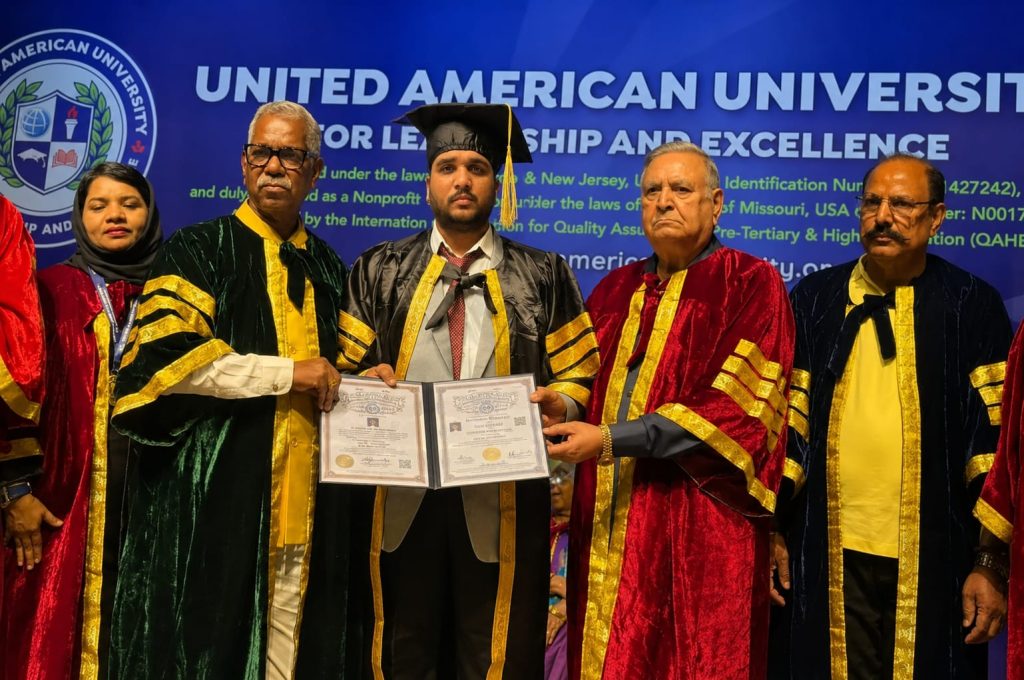
Vijayawada, Andhra Pradesh — In the world of Vedic astrology and spiritual counselling, Dr. Nudhurupati Umamaheswara Rao Sharma, popularly known as Umaswami, has built a name for himself over the past decade. Based in Vijayawada, Andhra Pradesh, he is the founder and CEO of Sri Gnanasaraswathi Vidhya Peetham, an institution dedicated to the study and practice of astrology. He is the son of Nudhurupati Hanumantha Rao Sharma and Leelavathi.
A Decade of Astrological Practice
According to Dr. Umaswami, he has spent more than 10 years practising and studying astrology, during which he says he has earned multiple certifications in the field. He describes this period as one dedicated to deepening his understanding of Vedic astrology, horoscope analysis, and traditional remedial practices, alongside building a client base that spans Vijayawada and the wider Andhra Pradesh region.
Over this period, he states that his consultations and guidance have reached and been trusted by more than 50,000 people across the region. He attributes this growing following to word-of-mouth referrals and repeat consultations from families seeking guidance on matters ranging from career and relationships to health and general life direction.
Dr. Umaswami states that his clientele includes people from all walks of life, including political leaders such as MLAs, MPs, and ministers, as well as TV actresses and other public figures, for whom he performs pujas and offers astrological guidance to help resolve personal and professional problems.
Recognition and Honorary Doctorate
Dr. Umaswami has been conferred an honorary doctorate in astrology by The United American University, a recognition he cites as validation of his years of study and contribution to the field of astrology. He often uses the “Doctor” title alongside his name in professional settings, presenting it as an acknowledgment of his long-standing commitment to the discipline.
He has also stated that he has received awards and recognitions from both state and central government bodies in acknowledgment of his work in astrology and community service, though specific award details have not been independently listed. Such recognitions, according to him, have reinforced his standing within the local astrology community and encouraged him to expand his practice further.
Sri Gnanasaraswathi Vidhya Peetham
As the founder and CEO of Sri Gnanasaraswathi Vidhya Peetham, Dr. Umaswami leads an institution focused on imparting astrological knowledge and guidance to the public. The Vidhya Peetham, based in Vijayawada, functions as a hub for those seeking astrological consultation and learning under his mentorship.
The institution is positioned as both a consultation centre and a learning space, where interested individuals can approach Dr. Umaswami for personal readings as well as guidance on astrological concepts. He has indicated plans to continue expanding the reach of Sri Gnanasaraswathi Vidhya Peetham, with an emphasis on making traditional astrological knowledge more accessible to the wider public.
About Vijayawada’s Growing Astrology Community
Vijayawada, one of Andhra Pradesh’s key cities, has long been home to a strong tradition of astrology and Vedic sciences. Practitioners like Dr. Umaswami continue to draw local and out-of-state clients seeking guidance rooted in traditional astrological practices.
The city’s continued association with astrology and spiritual counselling has allowed practitioners to build institutions, like Sri Gnanasaraswathi Vidhya Peetham, that combine consultation services with broader community engagement. As interest in astrology continues to grow across Andhra Pradesh, figures such as Dr. Umaswami are likely to remain prominent voices within this space, drawing attention both for their claimed credentials and their standing among a large base of regular clients.
Brandpost
From Kiranas to Cloud: How Nearwala Is Helping India’s Neighbourhood Stores Compete in the Digital Economy
India’s retail economy is powered by millions of neighbourhood Kirana stores and small retailers. These businesses continue to enjoy strong customer trust, daily footfall, and deep local relationships. However, they are increasingly competing against large digital-first platforms such as Amazon, Zepto, Blinkit, and other quick-commerce players that rely heavily on data, automation, targeted offers, and…
India’s retail economy is powered by millions of neighbourhood Kirana stores and small retailers. These businesses continue to enjoy strong customer trust, daily footfall, and deep local relationships. However, they are increasingly competing against large
digital-first platforms such as Amazon, Zepto, Blinkit, and other quick-commerce players that rely heavily on data, automation, targeted offers, and real-time consumer insights.
Nearwala, a Bengaluru-based startup founded in 2024 by Rajiv Surendran and Rahul K. C., is working to bridge this gap. The company is building a hyperlocal retail intelligence and commerce platform designed specifically for small and medium retailers, helping them modernize without forcing them to abandon their existing systems.
The larger story is not just about digitizing Kirana stores. It is about giving India’s offline retail ecosystem access to the same kind of data-driven growth tools that large digital platforms already use.
The History & Evolution
The Evolution of Nearwala: From a Pandemic Spark to India’s First AI-Driven Hyperlocal Retail Revolution
Behind every great disruption is a simple realization. For Nearwala, that realization happened in 2021 amidst the quiet, locked-down lanes of Calicut, Kerala.
As large e-commerce aggregates and delivery giants began rapidly eating away at the market share of neighborhood businesses, college friends and seasoned IT entrepreneurs Rajiv Surendran and Rahul K. C. saw local kiranas, supermarkets, and mom-and-pop shops facing an existential threat. The merchants didn’t lack the will to fight; they lacked the technology to do so.
Drawing from their deep tech backgrounds—having previously built vital public-health tech infrastructures for the Kerala Government through their startup Qkopy—the duo set out to build a digital shield for India’s traditional retail backbone.
Here is the journey of how Nearwala evolved from an on-ground experiment into a roaring retail movement:
⏱ The Timeline of Transformation
2021: The Genesis & “Talking Shops” The founders initially experimented by building standalone apps for individual local shops, but quickly realized that small merchants lacked the resources to manage them independently. This led to Talking Shops, a pilot chatbot-driven app in Calicut allowing consumers to discover and chat directly with 100+ local merchants. The concept proved that hyper-local engagement worked.
2022 – 2023: The Pivot & Prototype Recognizing the pan-India scale of this retail crisis, the founders paused the pilot to undergo extensive market research. By May 2023, the core prototype of Nearwala was born. A rigorous field-testing pilot ran from June 2023 to January 2024 to refine the app’s dynamic, AI-driven discounting engine
2024: Formal Infrastructure & Trust Building In February 2024, the parent entity NearPay Innovations Pvt Ltd was officially registered. This phase was all about breaking down merchant skepticism around digital payments and technology. By targeting forward-thinking local retailers, Nearwala proved it could drive measurable footfall and visibility, earning the trust of the community.
Present Day (2025–2026): Shaking Up the Indian Retail Ecosystem Headquartered in Bangalore, Nearwala has grown into a powerhouse platform serving over 200,000 active users and bridging the gap for 4,000+ local merchants—including emerging household names like La Pino’z Pizza and Five Star Chicken. Operating across primary hubs like Bangalore, Calicut, Hyderabad, Kochi, and Coimbatore, the platform is rapidly expanding to 50 cities nationwide.
How Nearwala is Levelling the Playing Field
Unlike traditional aggregator platforms that commoditize small shops or
quick-commerce monopolies that aim to replace them, Nearwala equips local retailers with enterprise-grade tech.
By providing inventory tracking, automated sales analytics, dynamic AI-driven consumer engagement layers, and localized marketing support, small retailers can finally fight back against deep-pocketed conglomerates on equal footing We are moving away from a model that forces massive platform-funded discount burns toward a self-sustaining, community-driven ecosystem. Nearwala is proving that when small shops are armed with artificial intelligence and grassroots support, they don’t just survive the digital age—they lead it [cite:
The future of Indian retail isn’t purely virtual; it’s hyper-local, community-focused, and powered by Nearwala.
The Problem
India’s retail market is worth over a trillion dollars, with offline neighbourhood stores continuing to dominate a major share of daily consumer spending. Yet, many of these retailers still operate with outdated billing systems, fragmented customer records, limited digital visibility, and almost no access to real-time business intelligence.
As consumer behaviour shifts toward convenience, discounts, digital payments, and personalized offers, small retailers are often left at a disadvantage. They are not losing relevance because customers do not trust them. They are losing competitive ground because they lack the digital tools needed to understand customers, run targeted promotions, manage loyalty, and make smarter business decisions.
The Nearwala Solution: An AI Layer, Not a Forced Migration
Nearwala’s approach is designed around the reality of India’s small retailers. Instead of asking shop owners to completely replace their existing billing software or operational systems, the platform works as an AI-powered overlay that can integrate with their current workflows.
Through Nearwala, merchants can access tools such as:
- Cloud-based analytics to understand sales patterns, customer behaviour, and inventory movement.
- Expiry and stock visibility tools to reduce wastage and improve decision-making.
- Hyperlocal heat-map insights that help retailers identify Nearwala users within a 1–5 km radius.
- Location-specific promotional tools to attract nearby customers.
- Digital storefronts for merchants who want an online presence without building their own app or website.
- Loyalty and reward programs to improve repeat purchases.
- Delivery enablement through logistics partners such as Porter and Shadowfax.
This makes Nearwala a practical digital growth layer for traditional retailers rather than a disruptive replacement for their existing business systems.
Traction So Far
Since launch, Nearwala has reported strong early traction across both merchants and consumers.
The company has:
- Onboarded more than 7,000 merchants across 15 Indian cities.
- Built a consumer base of over 600,000 shoppers.
- Generated more than 100 million cumulative engagements across digital and social channels.
- Processed over ₹15 crore in business volume during FY 2025–26.
These numbers position Nearwala as an emerging player in the hyperlocal commerce and retail intelligence space, with a clear focus on empowering offline businesses rather than replacing them.
The Dual-Sided Marketplace Model
Nearwala operates as a dual-sided marketplace connecting merchants, consumers, and brands.
For Consumers
Consumers using Nearwala can make payments through the platform’s QR system and receive instant discounts funded by merchant-set commissions. They can also earn digital gold and NCoins, where 1 NCoin is equivalent to ₹1, through purchases and engagement with in-app advertisements from local and regional brands.
This creates a reward-driven commerce experience that encourages customers to discover and transact with nearby businesses.
For Brands and D2C Companies
For Direct-to-Consumer brands, Nearwala offers an alternative route to customer acquisition. Instead of depending only on high-commission quick-commerce or marketplace platforms, brands can run targeted hyperlocal campaigns through Nearwala.
Companies such as Tata Motors and Craze Foods can use the platform to test offline purchase behaviour, increase regional visibility, and reach relevant consumers before scaling campaigns more widely.

Funding and Growth Roadmap
Nearwala began with a bootstrap investment of ₹25 lakh from the founders and a friend. The company later raised ₹3.5 crore from angel investors and is currently preparing for a $4 million funding round.
Its long-term roadmap includes:
- Expanding to 50 cities.
- Reaching 10 million consumers.
- Onboarding 100,000 merchants, including D2C sellers.
- Bringing more than 1,000 advertisers onto the platform.
- Achieving nearly ₹200 crore in business volume.
- Targeting a possible IPO around 2029–30.
Why This Story Matters Now
The next phase of India’s retail digitization may not come from replacing Kirana stores with large platforms. It may come from equipping those stores with better technology, better customer data, and better digital discovery.
Nearwala’s model reflects a broader shift in Indian commerce: small retailers want to digitize, but they need tools that respect their existing operations, local customer relationships, and business realities.
By positioning itself as a hyperlocal intelligence and commerce layer for India’s neighbourhood businesses, Nearwala is attempting to create a technology bridge between offline retail and the digital-first consumer economy.
This makes the company a timely and relevant story for readers tracking Indian startups, retail technology, hyperlocal commerce, D2C growth, and the future of the Kirana ecosystem.
Brandpost
Book Reviews | Shadows of Avalon by Mohammad Huzaifa
In an era where fantasy literature continues to evolve beyond traditional tropes, Shadows of Avalon by Mohammad Huzaifa emerges as an ambitious and emotionally resonant novel that successfully blends mythological grandeur, supernatural intrigue, and deeply human storytelling. Published in June 2026, the novel introduces readers to the enigmatic city of Avalon—a realm balanced precariously between…
In an era where fantasy literature continues to evolve beyond traditional tropes, Shadows of Avalon by Mohammad Huzaifa emerges as an ambitious and emotionally resonant novel that successfully blends mythological grandeur, supernatural intrigue, and deeply human storytelling. Published in June 2026, the novel introduces readers to the enigmatic city of Avalon—a realm balanced precariously between Heaven, Hell, and the mortal world.
From its opening pages, the book distinguishes itself through its lyrical prose and epic world-building. The narrative begins with The Xuyaniad, an ancient poetic saga that establishes the mythology surrounding figures such as Palin and Xuyang, creating a rich legendary backdrop reminiscent of classical epics and Norse-inspired storytelling. The poetic passages lend the novel a timeless quality while preparing readers for the larger cosmic conflict that unfolds throughout the story.
At the heart of the novel is Lysander, a former hero whose physical wounds and emotional scars continue to shape his actions. Now the guardian of Sanctum, a fortress safeguarding the Divine Crystal and protecting an orphanage, Lysander embodies the book’s central theme: true heroism lies not merely in defeating monsters but in preserving hope and humanity. His quiet dedication to protecting vulnerable children adds a touching emotional dimension to a narrative otherwise filled with celestial threats and supernatural dangers.
One of the novel’s greatest strengths is its characterization. Author creates a cast that feels authentic despite the fantastical setting. Draven, the pragmatic physician and loyal friend, provides emotional grounding and memorable dialogue, while characters such as Serene and Elara bring fresh perspectives to the story. Particularly noteworthy is Serene, a necromancer portrayed not as a harbinger of death but as a compassionate listener to lost souls. Her introduction challenges conventional fantasy archetypes and adds emotional depth to the narrative.
The world-building is equally impressive. Avalon is depicted as a city suspended between modernity and myth, where ancient runes coexist with surveillance systems, and divine relics influence everyday life. The gradual emergence of “The Corruption” a catastrophic weakening of the barrier between realms creates a palpable sense of dread that steadily intensifies as the story progresses. The author skillfully balances action, mystery, and character-driven moments, ensuring that the novel never loses sight of its emotional core.
Another commendable aspect of the book is its exploration of themes such as sacrifice, friendship, grief, redemption, and belonging. Beneath the fantasy adventure lies a story about damaged individuals finding purpose and connection in a world threatened by chaos. The relationships between characters are handled with sensitivity, making their struggles and triumphs feel meaningful and relatable.
The prose itself deserves special mention. Whether describing eerie graveyards under a blood-red eclipse, bustling city streets overshadowed by impending catastrophe, or tender interactions between orphaned children and their protector, the author demonstrates a strong command of atmosphere and imagery. The narrative frequently shifts between grand, mythic scope and intimate emotional moments, creating a reading experience that is both immersive and heartfelt.
Shadows of Avalon will particularly appeal to readers who enjoy epic fantasy, supernatural adventures, and character-driven narratives. Fans of modern fantasy sagas that combine mythology, magic, and emotional storytelling will find much to admire in this novel.
.
Brandpost
The Man Who Came to Take Your Old Clothes — And Changed Everything
Every morning, across every Indian city, a man with a cart and a bell walks your street. He has been doing it for decades. You know the sound. You might have handed him a newspaper, an old bottle, a broken fan. You have never handed him your clothes. Not because you didn’t want to. But…
Every morning, across every Indian city, a man with a cart and a bell walks your street. He has been doing it for decades. You know the sound. You might have handed him a newspaper, an old bottle, a broken fan.
You have never handed him your clothes.
Not because you didn’t want to. But because nobody ever built a system that made it possible.
That gap — invisible, enormous, sitting at the intersection of 7.8 million tonnes of annual textile waste and a workforce of millions already doing last-mile collection — is exactly what Mayank Singh and Ayush Saxena saw when they founded Tooused.
The Problem Nobody Talks About
India’s textile waste crisis is staggering in its scale and surprisingly simple in its cause. Every year, Indian households, corporates, and institutions discard millions of tonnes of usable clothing. Less than 15% is recovered. The rest is incinerated or buried.
The reason is not indifference. Surveys consistently show that people want to responsibly give back their clothes. The reason is infrastructure. There is no reliable, convenient, rewarding system to receive used textiles at scale. The first mile of reverse logistics for clothing simply does not exist in India.
So clothes pile up in wardrobes. Or get thrown away. Or get passed along informally, with no traceability of where they go.
The Insight
When Mayank and Ayush began mapping the problem, they kept arriving at the same answer: the workforce to solve this already exists. The Kabadiwalas and Raddiwalas — India’s informal waste collectors — walk every neighbourhood, every day, building trust with households over years and decades. They are the original last-mile logistics network. They just had never been organised, equipped, or paid fairly.
Tooused calls them SATHI Partners. The word means companion. It is deliberate.
The insight was not to replace them with a startup fleet. It was to bring them inside the system. Give them an app. Give them a pickup schedule. Give them a fair, per-collection payment. And watch what happens when an informal workforce becomes a formalised reverse logistics network.
What happens, it turns out, is a 30 to 40% increase in their monthly income. And a collection network that covers an entire city without Tooused owning a single vehicle.
How It Works
A consumer downloads the Tooused app. She buys a Give Back Bag, fills it with clothes she no longer needs, and schedules a doorstep pickup. A Sathi Partner arrives, collects the bag, and the clothes enter a traceable recovery chain. She earns credits, redeemable in the Tooused marketplace. The clothes get sorted into reuse or recycling, with every garment logged on a live blockchain.
For corporates, Tooused runs organised collection drives tied to CSR commitments and EPR compliance under forthcoming CPCB regulations. For institutions like the Indian Air Force, which has signed an MOU covering all 151 stations across the country, Tooused delivers structured, pan-India textile recovery at scale.
Three channels. One network. One Sathi Partner at the centre of all of it.
The Numbers
Tooused has grown revenue from Rs.26 lakhs to Rs.70 lakhs in a single year, and this year is on track to close at Rs.2 crore in topline. It has 3.5 lakh registered users and a 48% repeat rate — meaning nearly half of everyone who uses Tooused comes back. A credit redemption rate of around 80% tells the rest of the story: people are not just participating; they are finding real value in it.
The Indian Air Force MOU is perhaps the most striking signal. A national defence institution, spanning 151 stations across India, is trusting a young startup to handle its textile recovery at scale. It is the kind of institutional validation that takes most companies a decade to earn.
The Bigger Vision
Tooused is not, at its core, a textile company. It is a reverse logistics company that started with textiles because that is where the gap was most visible and most solvable.
The Sathi Partner who picks up your old kurta today can pick up your old phone tomorrow. And your cardboard the day after. Every category added to the network compounds the income of every Sathi Partner in it. The infrastructure being built now, for clothes, is the foundation for India’s urban reverse logistics economy.
That is the real bet: that the man with the cart and the bell, equipped with an app and a fair payment, becomes the backbone of how India recycles everything.
Why It Matters
There are companies building sustainability products for the top of the market. Premium, design-forward, aspirational. Tooused is building for the street. For the household that wants to do the right thing but has no system to do it through. For the Sathi Partner who has been doing this work for thirty years and deserves to earn more from it. For the brands that will face mandatory EPR compliance and need a partner who can actually prove the textiles were recovered.
It is infrastructure. Unglamorous, essential, and until now, completely absent.
Mayank Singh and Ayush Saxena are building it. One doorstep at a time.
Tooused is headquartered in Gurugram, Haryana. www.tooused.com*
-
Brandpost2 years agoRedfox Overseas: Customize Your Own Energy Drink and Stand Out in the Market
-
Brandpost1 year agoZamzam Company CEO Chhote Bhai-Bade Bhai gave a grand welcome to Indian writer Devhari Sirvi in Dubai
-
Fashion2 years agoShikha Sharma: The Fashion Journalist, Blogger, and Plus-Size Model Taking the Industry by Storm
-
Politics9 years agoCongress rolls out ‘Better Deal,’ new economic agenda
-
Entertainment9 years agoThe old and New Edition cast comes together to perform
-
Business9 years agoThe 9 worst mistakes you can ever make at work
-
Fashion9 years agoThese ’90s fashion trends are making a comeback in 2017
-
Fashion9 years agoAccording to Dior Couture, this taboo fashion accessory is back