
Brandpost
Hostimizer: Pioneering Web Hosting and Digital Services Since 2012


Since its inception in September 2012, Hostimizer, a prominent web hosting company registered under LithiumWeb Online Services LLP, has been at the forefront of the digital services industry. Founded by Deepak Kumar Gautam, who serves as the Founder and CEO, Hostimizer has established itself as a leader in providing a diverse range of web hosting and digital solutions tailored to meet the needs of both businesses and individuals.
Hostimizer offers a comprehensive suite of services designed to support various aspects of the digital ecosystem. Their offerings include web hosting, cloud servers, and dedicated servers, all of which are crucial for ensuring a reliable online presence. In addition to these core services, Hostimizer provides expert setup and management solutions, domain registration, and website design and development. They also specialize in Android app development, making them a one-stop shop for clients looking to enhance their digital footprint across multiple platforms.
One of the key strengths of Hostimizer is its focus on seamless site migration. The company offers efficient restoration and migration services for websites, including specialized solutions for WordPress site migration. This ensures that clients experience minimal downtime and smooth transitions when moving their online assets.
Moreover, Hostimizer stands out with its advanced offerings such as CanvaPro, including the Canva Pro Reseller Admin Panel, and an impressive 100TB Google Drive storage solution. Their services extend to providing Google Voice virtual USA numbers, LinkedIn Business Premium, and educational email services from USA universities and colleges. Additionally, they offer the LinkedIn Verified Check Mark Badge, SEO, and SMM services to help businesses boost their online presence and visibility.
Under the leadership of Deepak Kumar Gautam, Hostimizer has continually adapted to the evolving digital landscape, maintaining a commitment to quality and customer satisfaction. Gautam’s visionary approach has been instrumental in the company’s growth, positioning Hostimizer as a trusted partner for a wide range of digital needs.
With a track record of over a decade, Hostimizer remains dedicated to providing innovative solutions and exceptional support. As the digital world continues to advance, Hostimizer is poised to continue leading the way, ensuring that its clients receive the highest level of service and expertise.
For more information about Hostimizer and their comprehensive range of services, interested parties are encouraged to visit their website or contact their support team.
Company Website : https://www.hostimizer.com & https://www.lithiumweb.com
Customer Service : +91 9670044555
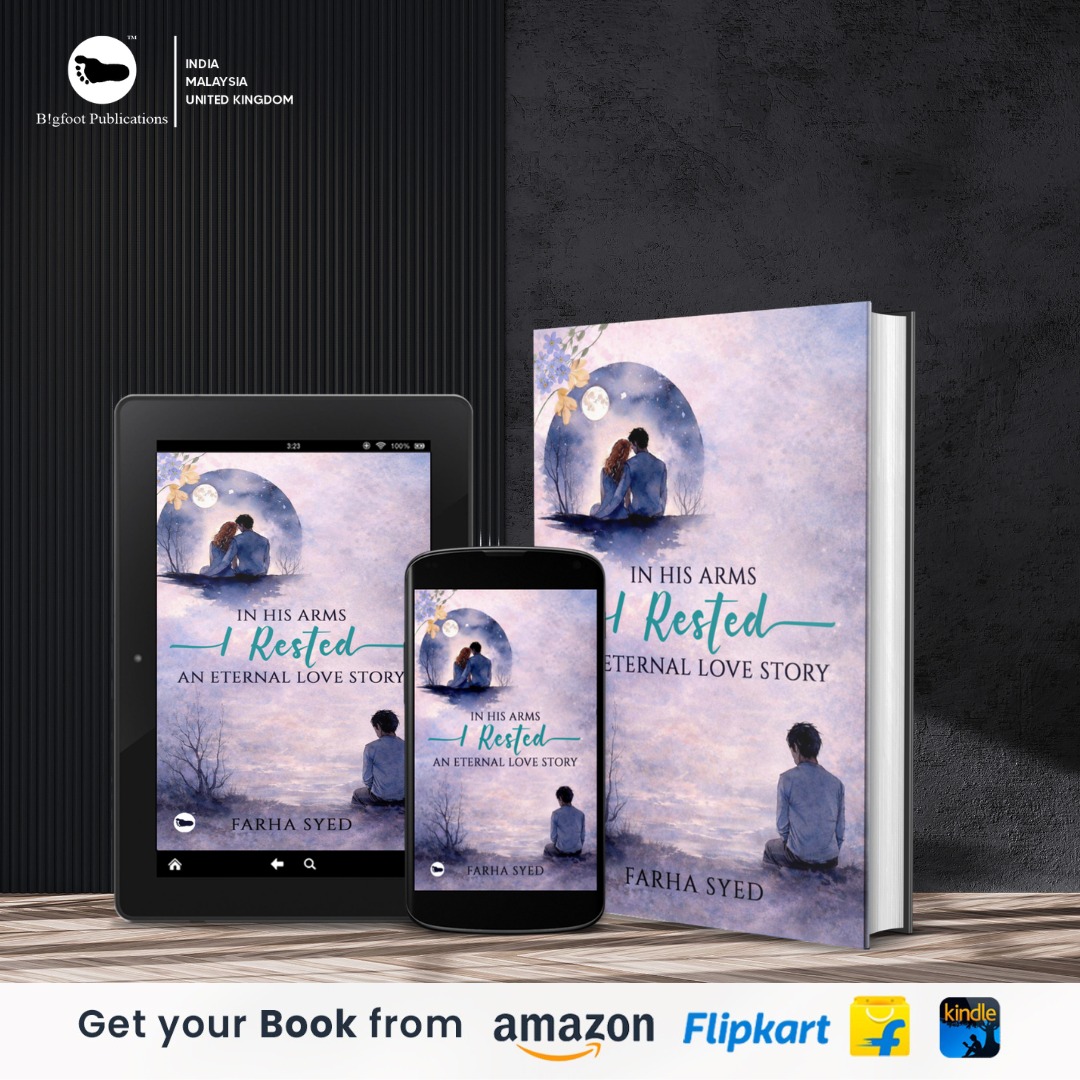
In an era where love stories often follow predictable arcs, In His Arms, I Rested by Farha Syed emerges as a deeply moving narrative that intertwines romance with resilience. Set against the emotionally charged backdrop of a hospital oncology ward, the novel explores the fragile yet powerful nature of human connection in the face of life’s harshest realities.
The story revolves around Safa, a young woman battling cancer with remarkable grace, and Danish, a compassionate hospital chef whose quiet acts of kindness evolve into profound love. What sets this novel apart is its refusal to dramatize suffering; instead, it presents pain with honesty and tenderness. Safa’s journey is not just about illness but about dignity, acceptance, and the courage to keep living even when life feels uncertain.
Farha Syed’s writing is simple yet evocative, making the narrative accessible while still emotionally rich. The hospital setting is portrayed with authenticity, capturing both the clinical routine and the silent emotional battles fought within its walls. From the very first chapter, where Danish prepares a meal with heartfelt care for a patient he has never met, the story draws readers into a world where small gestures carry immense meaning.
One of the novel’s greatest strengths lies in its characters. Safa is portrayed not as a victim but as a beacon of strength, radiating kindness even in her weakest moments. Danish, on the other hand, embodies quiet devotion, his love is not loud or possessive but patient, respectful, and deeply humane. Their relationship develops organically, rooted in empathy rather than mere attraction.
The narrative also touches upon themes of family, faith, and selflessness. The emotional bond between Safa and her parents adds depth to the story, reminding readers of the silent strength families offer during times of crisis. Meanwhile, Danish’s acts whether cooking, caregiving, or simply being present highlight the transformative power of compassion.
In His Arms, I Rested is not just a love story it is a reflection on life’s impermanence and the beauty of human connection. It leaves readers with a lingering sense of warmth and a gentle reminder: sometimes, love is not about grand gestures, but about simply being there.

There is a quiet honesty to Broken Hearts that does not demand attention, it earns it. In her debut chapbook, Anuki transforms private pain into lyrical reflection, offering readers twenty-seven poems that trace the fragile yet resilient journey of a woman negotiating identity, love, and freedom within the tight frames of social expectation.
What begins as a personal preface soon unfolds into something collective. Anuki writes not only for herself but for countless women raised with invisible boundaries, taught sacrifice before selfhood, endurance before expression. Her verses move through girlhood, marriage, emotional neglect, and eventual awakening with a simplicity that feels intimate rather than ornamental. There are no grand metaphors or heavy abstractions. Instead, the language is direct, almost conversational, which makes the emotions land with greater force.
At the centre of the collection lies a marriage that appears tender on the surface yet slowly fractures under deceit, silence, and psychological distance. The poems document this erosion with restraint. Rather than anger, we see observation; rather than accusation, clarity. This tonal control is one of the book’s strengths. Anuki resists melodrama and instead allows small details, unanswered calls, lonely evenings, dismissed truths, to speak for themselves.
Yet Broken Hearts is not a chronicle of suffering. Its real triumph is recovery. The later poems shift gently toward self-reclamation: education, work, independence, and the rediscovery of inner worth. The “broken hearts” of the title become symbols not of defeat but of survival, cracks through which light enters.
Stylistically, the collection feels like journal entries turned into poetry. Some pieces read like confessions, others like letters never sent. This diary-like authenticity gives the chapbook warmth and relatability. Readers may find themselves underlining lines that echo their own unspoken thoughts.
In an era where poetry often leans toward complexity, Anuki chooses accessibility, and that choice makes her voice powerful. Broken Hearts speaks softly but stays with you long after the last page.

In an age of fast-moving headlines and fleeting attention spans, Love’s Little Melodies by Dr. Satish Reddy Chadeve invites readers to slow down and listen, not to noise, but to the quiet music of everyday life.
This collection of 30 poems stands out for its unique structure. Each poem is crafted into exactly 13 lines, a deliberate choice that mirrors the brief yet meaningful nature of the moments the poet captures. The discipline of the form adds rhythm, while the language remains gentle and accessible.
The author draws inspiration from simple human experiences, the blush of a high school crush, the innocence of teenage romance, the scent of soil in a garden, and the calm labour of farming. These are not dramatic or grand events. Instead, they are moments that often pass unnoticed. Yet in his hands, they become lyrical reflections on memory, love, and time.
One of the most touching aspects of the book is its emotional range. A poem about the loyal companionship of a pet dog carries warmth and gratitude. A reflection on a quiet summer afternoon feels almost cinematic in its stillness. Particularly striking is the portrayal of a solitary shepherd, where loneliness is not shown as sorrow, but as a space for dignity and depth, a “greatness” that comes from being alone with one’s thoughts.
The poet’s strength lies in observation. He notices what others overlook, the rhythm of daily work, the silent understanding between humans and animals, the soft ache of growing up. His verses are tender without being sentimental, thoughtful without being complex.
The language is clear and musical, making the collection accessible to a wide audience. Readers do not need to be poetry scholars to appreciate these works. Instead, they are invited to connect with their own memories and emotions.
Love’s Little Melodies is not a loud or dramatic collection. It does not demand attention; it earns it quietly. Through its structured simplicity and heartfelt themes, the book reminds us that life’s grand symphony is built from small, almost hidden notes.
For readers seeking poetry that feels personal, reflective, and rooted in everyday beauty, Dr. Satish Reddy Chadeve’s latest offering is a gentle and rewarding read.


Book Review | In His Arms, I Rested by Farha Syed

Book Review | Broken Hearts by Anuki

Book Review | Love’s Little Melodies by Dr. Satish Reddy Chadeve

Redfox Overseas: Customize Your Own Energy Drink and Stand Out in the Market

Zamzam Company CEO Chhote Bhai-Bade Bhai gave a grand welcome to Indian writer Devhari Sirvi in Dubai

Shikha Sharma: The Fashion Journalist, Blogger, and Plus-Size Model Taking the Industry by Storm
-
 Brandpost2 years ago
Redfox Overseas: Customize Your Own Energy Drink and Stand Out in the Market
-
 Brandpost1 year ago
Zamzam Company CEO Chhote Bhai-Bade Bhai gave a grand welcome to Indian writer Devhari Sirvi in Dubai
-
 Fashion2 years ago
Shikha Sharma: The Fashion Journalist, Blogger, and Plus-Size Model Taking the Industry by Storm
-

 Politics9 years ago
Congress rolls out ‘Better Deal,’ new economic agenda
-
Entertainment9 years ago
The old and New Edition cast comes together to perform
-
Fashion9 years ago
According to Dior Couture, this taboo fashion accessory is back
-
Fashion9 years ago
These ’90s fashion trends are making a comeback in 2017
-
Business9 years ago
The 9 worst mistakes you can ever make at work