
India
Dakloni Masala: How a 1983 Odisha Spice Legacy Is Powering India’s Growing D2C Kitchen Movement

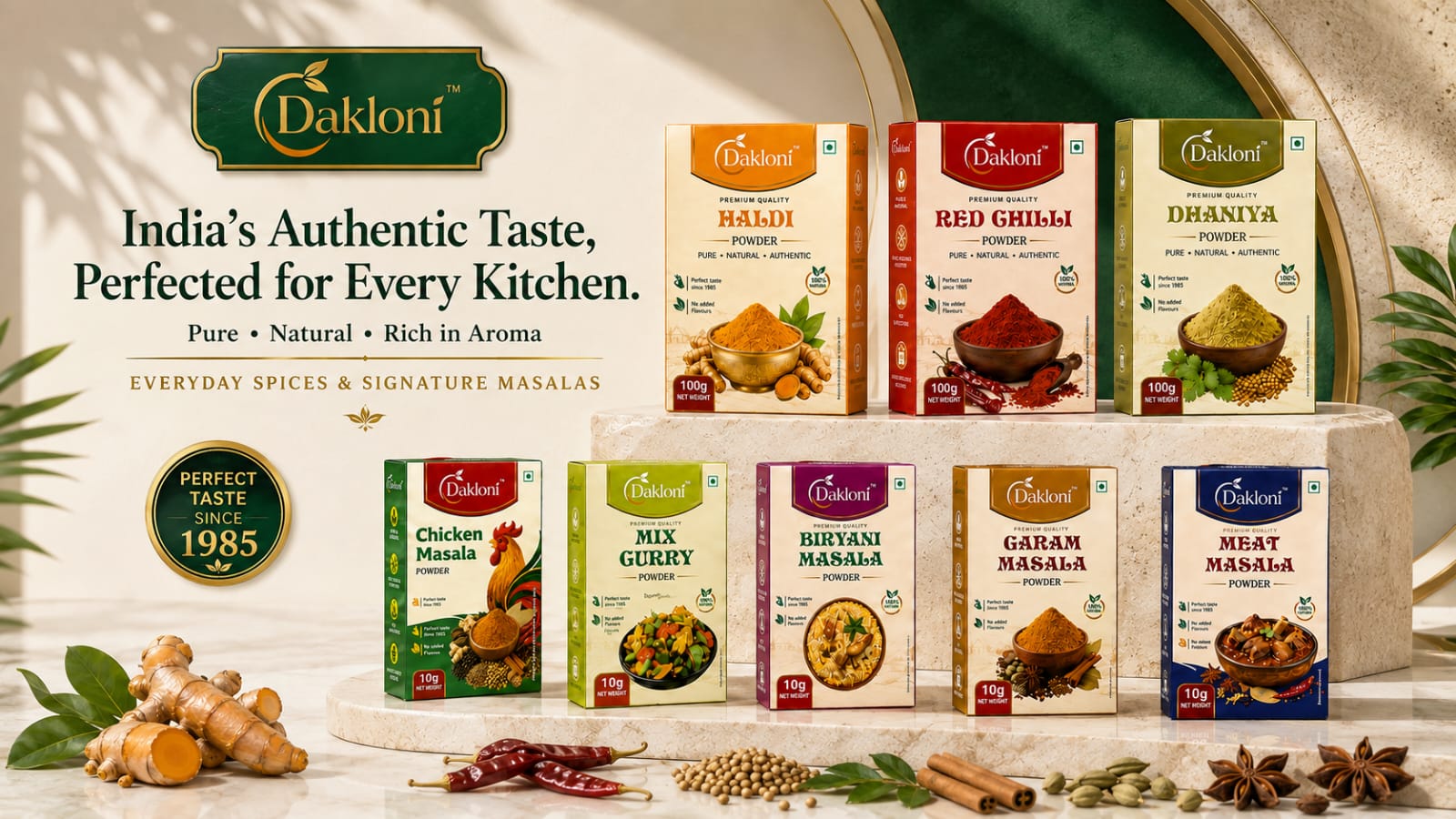
Long before packaged spice blends became a shelf staple in Indian homes, families in Odisha were grinding, sun-drying and hand-mixing their masalas in small batches, guided by recipes passed down through generations. That is the world Dakloni Masala grew out of. Founded in 1983, the brand has spent more than four decades supplying households across Odisha and, more recently, the rest of India with spice blends rooted in regional tradition. Today, under its parent company Green Chocy Pvt Ltd, Dakloni Masala is positioning itself as one of India’s emerging direct-to-consumer (D2C) spice brands, selling straight from its own website to kitchens nationwide.
Odisha Roots, National Ambitions
Odisha’s cuisine leans on subtle, layered spicing rather than sharp heat, and Dakloni Masala’s blends reflect that heritage. The brand describes its process as staying close to how spices were traditionally prepared in the region — cleaned, dried and ground in a way that preserves natural aroma rather than masking it with fillers. As the company has grown, it has carried that regional identity forward while widening its distribution to reach kitchens well beyond Odisha’s borders, part of a broader trend of regional Indian food brands going national through online channels.
What’s Inside the Dakloni Masala Range
The current product line-up covers the essentials that anchor most Indian meals, alongside a curated dry fruits selection:
- Turmeric Powder — used daily across Indian cooking for its colour, earthy flavour and long-standing place in home remedies.
- Red Chilli Powder and Kashmiri Red Chilli Powder — the former for everyday heat, the latter prized for its deep colour with a comparatively milder bite.
- Garam Masala — a blended spice mix used to finish curries, dals and vegetable preparations with warmth and depth.
- Garlic Powder and Onion Powder — pantry staples that add quick flavour to marinades, gravies and snacks without the prep time of fresh produce.
- Dry Fruits — including cashews, almonds, walnuts, pistachios and raisins, sold as part of the brand’s broader pantry offering.
Quality Claims: What Dakloni Masala Says About Its Standards
Dakloni Masala markets its spices as organic and free from artificial additives, positioning purity as its central promise to customers. The brand states that its sourcing, cleaning and packaging processes follow strict hygiene protocols, from selecting raw spices to sealing the final packet, so that what reaches a customer’s kitchen is as close as possible to what left the processing unit. For a category where adulteration and inconsistent quality have long been consumer concerns in India, this emphasis on traceable, hygienic processing is central to how the brand differentiates itself in a crowded spice market.
Why Dry Fruits Are Part of the Line-Up
Alongside spices, Dakloni Masala also sells a range of dry fruits, which nutritionists commonly point to as a convenient way to add fibre, protein and micronutrients to a daily diet. Almonds and walnuts are frequently associated with heart and brain health, cashews contribute minerals such as magnesium and zinc, pistachios offer plant protein along with antioxidants, and raisins are often used as a natural way to add sweetness while supplying iron and potassium. By bundling dry fruits with its spice range, Dakloni Masala is tapping into the same pantry-stocking behaviour that drives spice purchases — households buying once for ingredients they will use through the month.
Green Chocy Pvt Ltd and the D2C Push
Dakloni Masala operates under Green Chocy Pvt Ltd, the parent company steering the brand’s expansion. Rather than relying solely on traditional retail counters, the company has built a direct-to-consumer model, selling through its own website so customers can order spice blends and dry fruits directly and have them delivered to their door. This approach mirrors a wider shift among Indian food and grocery brands, which are increasingly using D2C websites and social media to reach customers directly, cut out layers of distribution and build a closer relationship with the households who buy from them repeatedly.
A Legacy Brand Adapting to a Digital-First Market
What makes Dakloni Masala’s story notable is the combination of a four-decade regional legacy with a distinctly modern distribution strategy. Many heritage spice makers in India remain confined to local markets, while newer, venture-backed D2C brands often lack a long-standing production history to point to. Dakloni Masala is attempting to sit at the intersection of both worlds: leaning on its 1983 origins in Odisha as a mark of authenticity, while using an e-commerce-led, D2C structure to compete for a national audience that increasingly researches and buys pantry staples online rather than at a neighbourhood store.
Where to Find Dakloni Masala
Customers can explore the full Dakloni Masala range and place orders directly through the brand’s official websites:
The brand also maintains an active presence on social media:
As Indian households continue to shift a share of their grocery spending online, brands like Dakloni Masala illustrate how a decades-old, regionally rooted spice maker can reposition itself for a national, digitally connected customer base without losing the traditional identity that built its reputation in the first place.











By Anil Mohan
For years, India’s marathon landscape was dominated by major metropolitan cities such as Mumbai, Delhi, Bengaluru, Hyderabad and Chennai. That is changing.
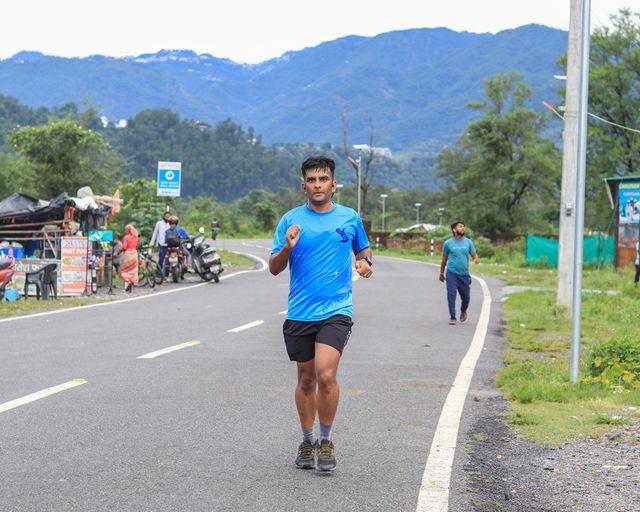
Running is increasingly expanding into smaller cities, hill destinations and tourism centres. Among them, Dehradun has the potential to become one of India’s important running cities.
Located in the Doon Valley and surrounded by the Himalayan landscape, Dehradun combines urban infrastructure, outdoor culture, natural surroundings and access to the mountains. It is a city where road running can connect naturally with a much larger story about exploration, endurance and the Himalayas.
Dehradun: Where the City Meets the Himalayas
Dehradun has traditionally been regarded as a gateway to the Himalayas, providing access to destinations such as Mussoorie and the wider Garhwal region while retaining the infrastructure of an important urban centre.
For runners, this creates a distinctive environment. A marathon in Dehradun is not simply another city road race; its surrounding landscape gives the experience a unique identity.
The city provides roads, accommodation and transport, while the mountains and forests provide the sense of adventure associated with Uttarakhand.
India’s Running Culture Is Changing
Over the past decade, running in India has evolved from a niche activity into a mainstream fitness and lifestyle movement.
Running communities, weekend runs, organised races, corporate groups and amateur clubs have introduced thousands of people to the sport.
The journey often begins with 5K, progresses to 10K or a half marathon, and for some eventually reaches the full 42.195-kilometre marathon. Others move into ultra-distance, trail and mountain running.
The distances differ, but the underlying motivation is often the same: to challenge oneself.
The Rise of Marathon Running in Dehradun
Dehradun is increasingly becoming part of this changing running landscape.
The Sarmang Dehradun Marathon is one of the events contributing to that development. It aims to bring professionally organised road running to Dehradun while creating opportunities for runners with different levels of experience.
The next edition is scheduled for 4 October 2026, with multiple race categories. The 2026 edition also introduces a 51K Ultra, taking the event beyond the conventional marathon distance.
This reflects a broader development in India’s endurance-sports culture: runners are increasingly seeking challenges beyond 42.195 kilometres.
From 5K to 51K: The Expanding World of Endurance
The growth of running does not mean everyone wants to become a marathon runner.
A first-time participant may choose 5K. A recreational runner may take on 10K. Others pursue the half marathon, full marathon or ultra distances.
The introduction of a 51K Ultra in Dehradun represents this expanding definition of endurance.
It also creates an opportunity to connect disciplines that have a natural relationship with Uttarakhand:
Road running → Trail running → Mountain running → High-altitude endurance
The state has the geography to support this entire spectrum.
Running Can Become Sports Tourism
A runner travelling to Dehradun for a race is also a visitor to Uttarakhand.
They may arrive early, stay in hotels, eat at local restaurants, explore the city, visit Mussoorie or nearby destinations, and travel with family or friends.
This creates an ecosystem around sporting events.
A stronger calendar of professionally organised running events could therefore contribute to a broader sports-tourism economy, extending beyond road marathons to trail races, cycling events, mountain challenges and high-altitude endurance experiences.
From the Road to the Trail
A runner’s journey does not have to end after a road marathon.
Someone who begins with a 5K may discover trail running. A trail runner may progress towards longer mountain routes, and a mountain runner may eventually seek high-altitude challenges.
The journey can continue:
Road → Trail → Mountain → High Altitude
Dehradun can potentially serve as one of the gateways into this larger ecosystem because of its location and connection to Uttarakhand’s adventure landscape.
Building a Running Culture, Not Just More Races
For Dehradun to truly establish itself as a marathon city, simply organising more races will not be enough.
A sustainable running culture requires:
Active local running communities
Safe and accessible running spaces
Professionally organised races
Support from public authorities
Medical and emergency infrastructure
Trained volunteers
Local businesses
Corporate participation
Youth engagement
Sports tourism
Opportunities for runners at different levels
The real measure of a running city is not only how many people participate in one event, but how many people start running because the culture around them encourages it.
The Role of Sarmang
The larger Sarmang journey is not simply about creating another race.
It is about creating opportunities for people to discover endurance in different forms.
The road marathon can be an entry point. Trail running can be the next step. Mountain challenges can take the journey further, and extreme-altitude events further still.
The underlying idea is simple: explore, endure and discover what lies beyond the limits we place on ourselves.
The Sarmang Dehradun Marathon is one expression of that philosophy.
Dehradun’s Opportunity
The question is no longer whether running can become an important sporting activity in India. It already has.
The more interesting question is which cities will become the next major destinations for runners.
Dehradun has many of the ingredients: its geography, Himalayan identity, outdoor culture, growing running community and potential to connect sport with tourism.
The Sarmang Dehradun Marathon on 4 October 2026 is one step in that journey.
The larger opportunity extends beyond a single race. It is about creating a city where people come not only to compete, but to challenge themselves, discover the outdoors, experience the Himalayas and become part of a growing culture of endurance.
If Dehradun can build that ecosystem, it could become one of India’s important destinations for running, endurance and adventure.
Perhaps the real opportunity is not simply to build more races, but to build a culture around the journey.
About the Author
Anil Mohan is the Founder of Sarmang Adventure Tours and Secretary of Sarmang Society. He is involved in organising running, endurance, adventure and high-altitude events in the Himalayan region.

Virus Solution Provider – Ransomware Data Recovery Specialists, Delhi
Makop ransomware is a file-encrypting threat that can make personal and business data inaccessible. It may affect desktop computers, laptops, NAS devices, servers, VMware virtual machines, shared folders, RAID storage and database environments.
Virus Solution Provider provides Makop ransomware data recovery and decryption analysis in India. The process begins by understanding the incident, preserving affected storage and determining which recovery methods are technically suitable for the specific variant.
Makop Ransomware Recovery Workflow
A Makop case can involve ransomware identification, encrypted-file analysis, storage assessment, recovery feasibility checking, decryption or restoration, data verification and secure handover. For servers or virtual systems, engineers may also consider virtual disks, storage configuration, databases and application dependencies.
- Makop encrypted-file and ransom-note analysis
- Desktop and laptop data recovery
- NAS and RAID ransomware recovery
- Server and VMware virtual machine assessment
- Database and business-data recovery
- Usability checks for recovered files
The recovery scope can include desktops, laptops, NAS storage, physical servers, VMware virtual machines, RAID arrays, HDDs, SSDs, shared network folders and business databases.
Weax, MKP and Makop Ransomware Recovery
Weax ransomware recovery begins with identifying the encrypted-file pattern and preserving representative samples. MKP ransomware analysis may involve shared storage, databases and server files. Makop ransomware recovery can include workstations, NAS devices, servers, VMware virtual machines and other connected environments. In every case, the available method depends on the actual ransomware variant and condition of the affected data.
A legitimate service should not promise that one tool can decrypt every ransomware infection. Backup availability, encryption implementation, storage condition, virtual-disk integrity and the presence of unaffected copies can all influence the result.
Three Ransomware Data Recovery Plans
1. Online Ransomware Data Recovery
Suitable cases can begin remotely with incident details, the ransom note, encrypted-file extension and representative samples. Online assessment is useful when rapid initial guidance is required or transporting infrastructure is impractical.
2. Visit the Delhi Office
Clients may bring affected computers or storage devices to Virus Solution Provider in Paschim Vihar, New Delhi. This option is suitable for many desktop, laptop, HDD, SSD, NAS and RAID cases.
3. On-Site Recovery at the Client's Location
Appropriate business cases may receive on-site assistance when servers, VMware systems, NAS devices or other critical infrastructure cannot conveniently be transported.
Professional Ransomware Recovery Process
Step 1: Incident Information Collection
Record the attack date, visible symptoms, affected devices, business impact and available backups.
Step 2: Ransomware Identification
Examine the ransom note, file extension, naming pattern and encrypted samples to identify the family or variant.
Step 3: Encrypted-File and Storage Assessment
Evaluate representative files and the condition of desktops, laptops, NAS, servers, VMware, RAID or other affected storage.
Step 4: Recovery Feasibility Check
Determine whether decryption, backup restoration, data reconstruction or another recovery method may be viable.
Step 5: Recovery and Verification
Perform the suitable procedure where technically feasible, then check important recovered files for usability and integrity.
Step 6: Secure Data Handover
Return verified recovered data using an appropriate storage or transfer method.
What to Do Immediately After a Ransomware Attack
- Disconnect affected systems from the network to help limit further spread.
- Do not format the affected drive, NAS, RAID, server or VMware datastore.
- Preserve the ransom note and representative encrypted files.
- Do not delete or rename encrypted files unnecessarily.
- Identify clean backups and keep them isolated from affected systems.
- Avoid repeatedly installing random decryptors on the original storage.
- Request a technical assessment before making major changes.
Frequently Asked Questions
Can Makop ransomware data be recovered?
Recovery potential depends on the Makop variant, encryption behaviour, backups and the condition of affected storage.
Should encrypted files be deleted?
No. Preserve encrypted files because they may be needed for analysis or a future recovery method.
Do you provide Makop recovery in Delhi?
Yes. Clients may visit the Paschim Vihar office, and other support models are available across India.
Contact Virus Solution Provider
For Weax, MKP, Makop or another ransomware incident, preserve the affected data and contact the recovery team for an initial assessment.
Sundeep Maan: MD and CEO
Company: Virus Solution Provider – Ransomware Data Recovery Specialists, Delhi
Support: 9667119691, 9990815450
Email: sundeepmaan@virusolutionprovider.com
Websites: https://virusolutionprovider.in/ | https://datarecoverservices.com/
Office: GH 6, 451, near St Mark Girls School, Meera Bagh, Paschim Vihar, New Delhi, Delhi 110087
Location: https://maps.app.goo.gl/AyxooTTnsBYokeRY9
Services include online ransomware data recovery, Delhi office-based recovery and on-site ransomware recovery at the client’s location. Recovery outcomes depend on the ransomware variant, encryption method, affected storage, backups and condition of the underlying data.

Om Infra reported a sharp turnaround in stand alone profitability for the quarter ended June 30, 2026 (Q1 FY27), with net profit at ₹11.82 crore, compared with a net profit of ₹0.60 crore in the corresponding quarter of the previous year. The results were approved by the company’s board on August 11, 2026.
Sales/revenue rose 19.20% year-on-year to ₹123.37 crore, from ₹104.84 crore in Q1 FY26. Operating performance also improved materially, with the operating profit margin (OPM) moving to 8.15%, compared with 0.60% a year earlier. Profit before depreciation, tax and other adjustments (PBDT) stood at ₹8.32 crore, against a loss of ₹0.58 crore in the year-ago quarter.
On a consolidated basis, Om Infra recorded revenue of ₹127.51 crore and net profit of ₹11.45 crore, according to results-related disclosures.
The earnings improvement comes alongside a strengthening project pipeline. Om Infra has emerged as the lowest bidder (L1) for two water-infrastructure projects in Chhattisgarh and Rajasthan with a combined value of around ₹1,050 crore, highlighting its expanding presence in water-resource infrastructure.
The latest quarterly numbers therefore point to a significant recovery in profitability, supported by higher revenue and improved operating margins. However, conversion of its large L1 pipeline into firm orders and timely execution will remain key factors for sustaining growth in the coming quarters.
Vikas Kothari, Managing Director of Om Infra, said the company delivered a robust performance in the June quarter, with revenue rising 20% and profit surging 900% compared with the same period last financial year. With two new projects worth ₹1,050 crore, for which the company emerged as the L1 bidder, Om Infra expects revenue and profit growth to remain strong during the current financial year. “We are committed to channelising India’s huge water resources for the Nation’s progress,” he said.


Nirvana Naturopathy and Retreat Igatpuri Nashik Honoured with National Excellence in Naturopathy and Preventive Wellness Award 2026

Realme P4s 5G India launch date confirmed as August 26

I, Nobody releases on JioHotstar today, Prithviraj’s thriller streams now

Redfox Overseas: Customize Your Own Energy Drink and Stand Out in the Market

Zamzam Company CEO Chhote Bhai-Bade Bhai gave a grand welcome to Indian writer Devhari Sirvi in Dubai

Shikha Sharma: The Fashion Journalist, Blogger, and Plus-Size Model Taking the Industry by Storm
-
 Brandpost2 years ago
Redfox Overseas: Customize Your Own Energy Drink and Stand Out in the Market
-
 Brandpost2 years ago
Zamzam Company CEO Chhote Bhai-Bade Bhai gave a grand welcome to Indian writer Devhari Sirvi in Dubai
-
 Fashion2 years ago
Shikha Sharma: The Fashion Journalist, Blogger, and Plus-Size Model Taking the Industry by Storm
-
Entertainment1 year ago
Lucky Roxx’s “Yadav Ki Pukar” Goes Viral! Youth Celebrate Unity & Power
-

 Entertainment9 years ago
New Season 8 Walking Dead trailer flashes forward in time
-
Entertainment9 years ago
Meet Superman’s grandfather in new trailer for Krypton
-

 Brandpost2 years ago
From Local Hero to National Icon: Satyam Yadav’s Journey with TwentyOne
-
Uncategorized2 years ago
Hello world!