Brandpost
Rote Learning vs. Conceptual Understanding: The Path to Mastery in Education
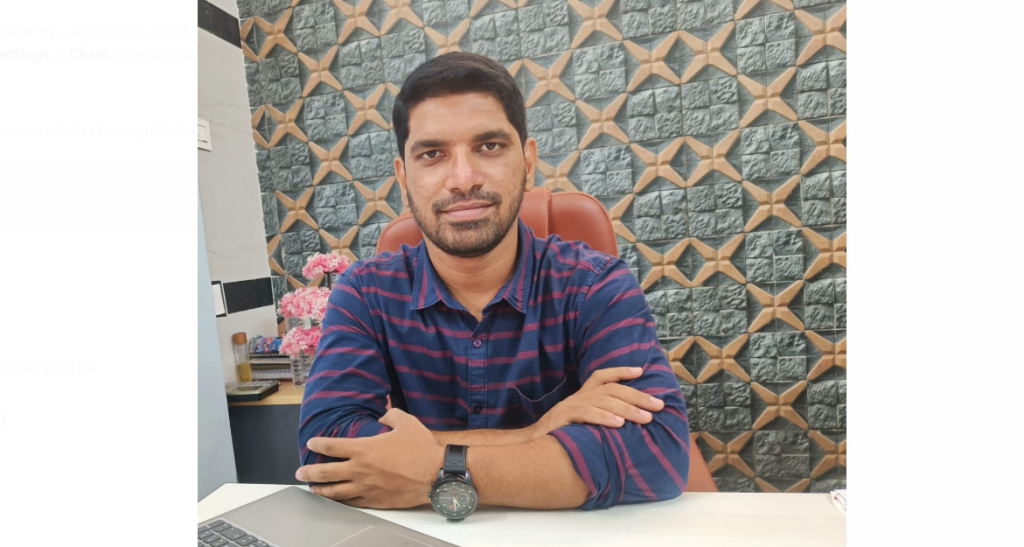
Sufyan Ahmed Khan is a Correspondent and Mentor at New Modern High School, Riyasath Nagar, Hyderabad, and can be reached at correspondent_sufyan@nmhs.co.in
Education is the cornerstone of personal and societal growth. As educators, we are tasked with not only imparting knowledge but also shaping the minds of future leaders. In our classrooms, we often encounter two distinct approaches to learning: rote learning and learning with conceptual understanding. While both have their places, the true art of teaching lies in knowing when to use each method and how to blend them seamlessly for the best learning outcomes.
Having spent years as an academician, teacher trainer, and facilitator, I have come to appreciate the nuances of these two approaches. Both rote learning and learning with understanding play critical roles, but the balance between them determines whether students merely memorize facts or truly grasp the principles that will serve them throughout their lives.
In this article, I aim to delve deeper into these two methodologies, drawing on my years of experience in education to shed light on the practical benefits and limitations of each approach. The goal is not to discredit one method over the other, but rather to highlight how an effective educator can integrate both to create an enriched, holistic learning experience.
Rote Learning: The Foundation of Knowledge
Rote learning, which involves memorizing facts, formulas, and processes, has often been seen as a mere exercise in repetition. Yet, in my years of teaching, I have observed that rote learning serves as the foundation upon which deeper understanding can be built. At its core, rote learning allows students to internalize basic facts and establish mental frameworks from which more advanced learning can spring.
For example, in early education, students often begin by memorizing the multiplication tables, geographical locations, or the periodic table. These fundamental building blocks of knowledge must be learned by heart, as they provide the groundwork for tackling more complex subjects.
The Strengths of Rote Learning:
- Quick Recall and Foundation Building: In subjects where foundational knowledge is crucial, such as language learning, mathematics, and science, rote memorization serves as a solid base. This ability to quickly recall facts is particularly useful in settings where immediate recall is necessary—be it in exams or practical applications.
- Efficiency in Basic Learning: For subjects that require memorization of definitions, formulas, or historical dates, rote learning can be the most efficient method to ensure a quick grasp of basic information.
- Structured Learning Environment: Rote learning thrives in a structured educational environment where the goal is to instill specific knowledge that does not require deep exploration or personal interpretation.
However, while rote learning is invaluable in the early stages, its drawbacks become evident when students are required to apply this knowledge or engage with more complex material.
Learning with Conceptual Understanding: A Deeper Dive
True mastery of any subject requires more than just the ability to recall facts. It requires an understanding of the principles and concepts that underpin those facts. Learning with understanding is a method that prioritizes comprehension over memorization, urging students to connect the dots and make sense of the material in a way that is meaningful to them.
For instance, in a science class, rather than simply memorizing formulas or the steps in an experiment, students should learn the ‘why’ and ‘how’ behind those formulas. This deeper understanding helps them apply their knowledge in varied contexts, solving problems and making decisions with confidence.
The Benefits of Conceptual Learning:
- Long-Term Retention and Real-World Application: When students understand the core principles of a subject, the knowledge sticks longer. It’s not merely about memorizing facts to pass a test—it’s about using that knowledge to tackle real-world challenges, innovate, and think critically.
- Critical Thinking Development: Learning with understanding encourages students to analyze, question, and synthesize information. It nurtures their ability to think critically, an essential skill for solving complex problems in both academic and professional life.
- Engagement and Motivation: As a facilitator, I have found that students who understand the ‘why’ behind what they are learning are far more engaged. They are motivated to dig deeper and explore how their knowledge applies to the world around them. When students can make connections and see the relevance of their learning, the classroom transforms from a space of passive absorption to one of active discovery.
- Adaptability and Lifelong Learning: In a rapidly changing world, the ability to adapt is critical. Students who have been taught to understand concepts are better equipped to learn new skills, think creatively, and stay curious throughout their lives.
The Challenges of Conceptual Learning:
- Time and Effort Intensive: A conceptual approach to learning takes more time and effort than rote memorization. It requires students to engage in critical thinking, practice, and application. This can be more taxing for learners, especially those who are not yet prepared for such deep exploration.
- Complexity in Delivery: Conceptual learning can sometimes feel overwhelming for students if not delivered in a structured and digestible manner. As a teacher, it is crucial to scaffold learning experiences so that students gradually build their conceptual understanding without feeling lost in the material.
- Requires Active Participation: For students to grasp concepts, they must actively participate in their learning. This means asking questions, engaging in discussions, and applying the concepts to real-life scenarios. Without active participation, the benefits of conceptual learning may not fully materialize.
Bridging the Gap: A Balanced Approach
As educators, our role is not to choose between rote learning and conceptual understanding but to strike a balance between both. When used in tandem, these methods can complement each other and help students achieve a deep, well-rounded understanding of their subjects.
For example, in the early stages of learning, rote memorization might be necessary to establish a foundational knowledge base. However, as students’ progress, we must encourage them to engage with the material on a deeper level—questioning, analyzing, and applying their knowledge to real-world situations.
This blend is particularly effective in subjects like mathematics, where students may need to memorize formulas but also understand the underlying principles of equations, algebra, and geometry. In literature, students might memorize literary devices or historical events, but they must also explore the themes, context, and interpretations that give those facts meaning.
As a teacher trainer, I emphasize that the key is to foster an environment where both approaches coexist. Encourage students to memorize essential information when necessary but push them to connect that information with broader concepts. Help them move beyond memorization by encouraging critical thinking and practical application. This approach ensures that students not only know the facts but also understand them deeply, retaining and applying that knowledge far beyond the classroom.
In education, both rote learning and conceptual understanding have important roles to play. Rote learning is essential for building a strong foundation, while conceptual understanding is critical for fostering long-term retention, critical thinking, and real-world application. As experienced educators, our challenge is to guide students through the process of mastering both, ensuring they not only recall information but also comprehend its deeper meaning.
By integrating both methods thoughtfully and strategically, we can cultivate learners who are not just knowledgeable but also adaptable, curious, and prepared to excel in an ever-changing world. As we continue to refine our teaching methods, it is this balance that will empower students to thrive academically and beyond.
Brandpost
Akhand Pratap Singh: The Fast Riser Reshaping India’s EdTech Landscape
India’s EdTech sector doesn’t lack for ambition. Over the past decade, it has attracted billions in investment, spawned hundreds of startups, and fundamentally changed how millions of people access education. But behind every growth chart and funding headline, there are individuals quietly doing the work — building teams, refining strategies, and figuring out how to turn a good idea into something that actually scales.
Akhand Pratap Singh is one of those people. And he’s done it faster than most.
In an industry where career progression typically follows a predictable, years-long climb, Singh has carved a different path — one defined by rapid promotions, measurable business impact, and a string of recognitions that reflect consistent, above-expectation performance. What others have taken a decade to achieve, he has accomplished in a fraction of the time.
A Career Built on Speed and Results
Currently serving as Director of Sales and Operations at Digicrome Pvt Ltd, Akhand’s rise to a director-level position within a condensed career timeline is itself a statement. He didn’t wait for opportunities to open up — he created the kind of results that made promotions inevitable.
With over six years in the EdTech industry, Singh has held senior leadership roles that most professionals take far longer to reach. Before joining Digicrome, he served as Associate Director at another EdTech company — a role he earned not by tenure, but by delivering. His ability to scale business operations in short timeframes, align teams around aggressive growth targets, and execute strategies that actually moved the needle made him stand out early and consistently.
Organizations he has been part of didn’t just grow — they grew faster because he was there.
Scaling Businesses, Earning Recognition
One of the most telling aspects of Akhand’s career is the recognition that has followed him across roles. He has been rewarded multiple times by the organizations he’s worked with — not as a formality, but as a direct acknowledgment of business impact. In sales and operations, rewards tend to follow results, and Akhand’s track record speaks for itself.
At Digicrome Pvt Ltd, where the focus is on high-demand online courses in Data Science and Artificial Intelligence, Singh has been instrumental in scaling the company’s business reach and operational efficiency. In an era where learners are increasingly seeking flexible, career-relevant education, his ability to align sales strategy with real market demand has helped Digicrome strengthen its position as a go-to platform for professionals looking to upskill.
The speed at which he has helped drive growth — expanding outreach, building high-performing teams, and converting market opportunity into actual revenue — reflects a rare combination of strategic clarity and hands-on execution.
The Making of a Fast-Track Leader
What makes Akhand’s story compelling isn’t just the titles or the awards — it’s the pattern. Promotion after promotion. Recognition after recognition. Business scaled, targets exceeded, and organizations left stronger than he found them. That kind of consistency, delivered quickly and repeatedly, is what separates high performers from the rest.
His leadership style leans into accountability and performance. He sets high bars — for his teams and for himself — and builds the kind of culture where results aren’t just expected, they’re celebrated. In an industry as competitive and fast-moving as EdTech, that mindset is an asset.
There’s also a maturity to how he approaches the work. Singh understands that sustainable growth in EdTech isn’t just about acquiring learners — it’s about delivering outcomes that make those learners advocates. Sales and educational impact, in his view, aren’t competing priorities. They reinforce each other.
A Name the Industry Is Starting to Notice
India’s EdTech market is maturing. The era of growth-at-all-costs is giving way to a more measured focus on real outcomes, operational discipline, and leadership quality. In that environment, professionals like Akhand Pratap Singh — who have demonstrated the ability to scale businesses quickly, earn organizational trust, and rise through the ranks on merit — are becoming increasingly visible.
He is, by any measure, a fast riser. But more importantly, he’s a consistent one. The promotions, the rewards, the business results — they aren’t isolated moments. They’re a pattern that has defined his career so far and will likely continue to define what comes next.
As digital education continues to reshape how India learns and works, Akhand Pratap Singh stands as one of the more compelling figures to watch — a leader who has already achieved more in less time than most, and who shows every sign of being just getting started.
Instagram- https://www.instagram.com/iam.akhandpratap?igsh=MTF5NXExYXVvYzE4
Brandpost
Nextstep Planners Emerging as a Key Support System for Delhi’s Real Estate Professionals
As Delhi’s property market grows increasingly crowded and digitally driven, a quiet but notable shift is underway in how real estate professionals are choosing to market themselves — and a handful of young, agile agencies are at the center of it.
Nextstep Planners, a marketing startup based in Delhi, is one such firm drawing attention. Founded by Ritik Jha, the company has spent the last five years building a service model aimed squarely at real estate agents, brokers, and developers navigating an intensely competitive urban landscape.
“The real estate sector in Delhi has always been relationship-driven,” the company’s positioning suggests, “but today, visibility on digital platforms is just as critical as word-of-mouth.”
The agency offers a broad range of services — from advertisement shoots and video production to social media marketing, influencer collaborations, and paid ad management. Each service, the company maintains, is oriented toward one outcome: helping property professionals reach more buyers, faster.
A Market That Demands More
Delhi’s real estate sector is not short of players. Thousands of agents and mid-sized developers compete daily for the attention of homebuyers in one of India’s most dynamic property markets. In this environment, marketing is no longer a luxury — it is a baseline requirement.
Digital platforms, particularly Instagram and YouTube, have transformed how properties are discovered. Buyers today often form their first impressions through video walkthroughs, social media posts, and influencer-led content — long before they step foot on a site visit.
It is precisely this gap that agencies like Nextstep Planners are attempting to fill. By offering production-quality content and managed digital campaigns, the firm positions itself as an end-to-end marketing partner rather than a conventional advertising vendor.
Beyond the Screen
What distinguishes Nextstep Planners from purely digital outfits is its reported involvement in on-ground activations. The agency has organized property trips and client events on behalf of real estate professionals — experiences designed to move potential buyers from passive interest to active engagement.
This experiential layer reflects a broader trend in real estate marketing, where developers and agents are investing in curated, relationship-first approaches to close deals that digital ads alone cannot seal.
An Expanding Footprint
In an unexpected diversification, Nextstep Planners has also extended its services to include university admissions support — a vertical that sits outside its core marketing identity. For a startup of its size, the move signals either a deliberate effort to diversify revenue streams or a response to organic demand from its existing client base.
Whether the two verticals — real estate marketing and education consulting — will remain complementary or eventually compete for the company’s focus remains to be seen.
The Founder’s Bet
Ritik Jha, who founded the company, belongs to a generation of entrepreneurs building lean, sector-specific startups rather than chasing scale across industries. His firm’s sustained focus on real estate — a sector notorious for its resistance to change — suggests a calculated long-term bet on niche expertise.
The agency maintains a visible presence on Instagram, where it documents campaigns, behind-the-scenes shoots, and client collaborations. For a company still in its early years, the social media trail doubles as both a portfolio and a proof of concept.
What Lies Ahead
Delhi’s real estate market shows no signs of slowing down. As new residential corridors develop and commercial demand rebounds post-pandemic, the ecosystem of service providers supporting the sector — legal, financial, and increasingly, marketing — is expanding alongside it.
For startups like Nextstep Planners, the opportunity is real, but so is the competition. Larger digital agencies, national marketing firms, and in-house teams at major developers all vie for the same mandates.
What smaller, specialized agencies have on their side is proximity — to clients, to local market dynamics, and to the kind of quick, personalized service that larger firms often struggle to deliver.
Whether Nextstep Planners can convert that proximity into a lasting competitive advantage will be the defining question as it moves from startup to established player.
Brandpost
Dr N Basetti Honoured by Central Minister for ENT Research Book
Dr N Basetti, a distinguished ENT (Ear, Nose, and Throat) surgeon originally from Jagityal, has recently been honoured by Central Minister Digambar Kamat in recognition of her remarkable contribution to medical research and healthcare. Known for her dedication and expertise in the field, Dr Basetti has built a strong reputation through years of service, innovation, and academic involvement.
Currently serving as the CEO of a multispeciality hospital in Kothagudem, Dr Basetti plays a vital leadership role in managing healthcare services while also ensuring quality patient care. Alongside her administrative responsibilities, she is actively involved in academics and contributes to a government teaching college, where she helps train and mentor aspiring medical professionals. Her dual role as a practitioner and educator reflects her commitment to both patient care and the future of the medical field.
Over the years, Dr Basetti has been honoured with multiple awards from ministers at both the state and central levels. These recognitions highlight her innovative contributions in the areas of patents, medical research, and publication of scholarly work. Her continuous efforts to advance ENT practices and share knowledge have earned her respect within the medical community.
Adding to her achievements, Dr Basetti recently published a research book titled ENT Essentials, carrying the ISBN number 978-93-7406-367-5. The book focuses on key concepts, clinical practices, and essential knowledge in the field of ENT, making it a valuable resource for students, practitioners, and researchers. The publication reflects her deep understanding of the subject and her intention to make quality learning material accessible to a wider audience.
The honour presented by Central Minister Digambar Kamat recognizes not only the publication of this research work but also her broader contributions to healthcare and medical innovation. Such recognition further strengthens her position as a leading figure in the field and serves as an inspiration for many young doctors and researchers.
On this occasion, Dr Basetti expressed her heartfelt gratitude to the CEO of Ramsay SS Hospitals for providing financial support through grants, which played a crucial role in the successful completion and publication of her research book. She acknowledged that this support covered major expenses related to the research and publishing process, enabling her to focus on delivering high-quality content.
Dr Basetti’s journey reflects dedication, hard work, and a passion for medical excellence. Her continued efforts in research, education, and patient care demonstrate her commitment to improving healthcare standards and contributing meaningfully to the medical community.
-
Brandpost2 years agoRedfox Overseas: Customize Your Own Energy Drink and Stand Out in the Market
-
Brandpost1 year agoZamzam Company CEO Chhote Bhai-Bade Bhai gave a grand welcome to Indian writer Devhari Sirvi in Dubai
-
Fashion2 years agoShikha Sharma: The Fashion Journalist, Blogger, and Plus-Size Model Taking the Industry by Storm
-
Politics9 years agoCongress rolls out ‘Better Deal,’ new economic agenda
-
Entertainment9 years agoThe old and New Edition cast comes together to perform
-
Fashion9 years agoAccording to Dior Couture, this taboo fashion accessory is back
-
Fashion9 years agoThese ’90s fashion trends are making a comeback in 2017
-
Entertainment1 year ago
Lucky Roxx’s “Yadav Ki Pukar” Goes Viral! Youth Celebrate Unity & Power