
India
“Grow Together, Strengthen Together”: Inside PTAHA’s Vision for India’s Tourism Sector

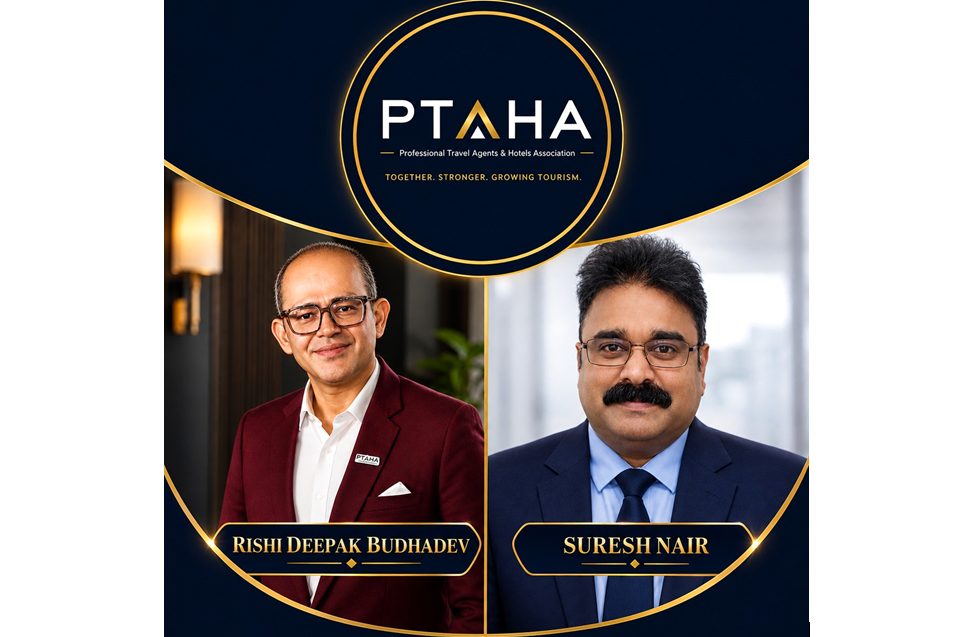
A guiding principle rather than a product line sits at the center of how the Professional Travel Agents and Hotels Association describes its purpose: “Grow Together, Strengthen Together,” a phrase PTAHA uses to frame its ambitions beyond simple membership recruitment.
The association, which says it crossed 100 members within 27 days of launching, describes its objective as building “a strong, connected and collaborative tourism community” rather than operating purely as a transactional membership body, according to its own materials. That framing places PTAHA within a broader category of Indian trade associations that position themselves around community and knowledge-sharing rather than purely commercial services.
A Vision Tied to New Leadership
PTAHA’s community-building language accompanied the announcement of Rishi Deepak Budhadev as National President and Suresh Nair as Acting Vice President, two appointments the association says are meant to give its stated vision organisational backing. Budhadev, in comments released by PTAHA, said the association’s early growth “belongs to the entire PTAHA Family” and represents the beginning of “a much larger journey” rather than a finished achievement.
What “Community” Looks Like in Practice
PTAHA has outlined a mix of concrete initiatives meant to operationalize its stated vision: participation and branding opportunities at tourism trade fairs, member promotion, webinars, educational and FAM trips, industry interactions, WhatsApp-based marketing initiatives, and connections with tourism boards, destinations and hotels. Trade-association researchers note that this kind of programming is a fairly standard toolkit for professional bodies globally, and that the value proposition ultimately depends on execution and sustained member engagement rather than the initiatives themselves.
A Test of Follow-Through
Newly formed associations often articulate ambitious community-oriented visions at launch; the harder test, industry observers say, is whether such organisations sustain engagement and deliver measurable member value once the initial launch momentum fades. PTAHA’s stated community-building programs have not yet been evaluated over a full operating year, given the association’s recent founding.
Measuring Vision Against Outcomes
Trade-association researchers who study membership organisations say community-oriented mission statements are easy to write and difficult to operationalize, particularly for bodies still building their administrative and financial infrastructure. Metrics such as member retention rates, event attendance and repeat participation in FAM trips or webinars are typically the clearest indicators of whether a stated vision translates into practice, though PTAHA has not yet published any such data given its short operating history.
How PTAHA Says It Will Measure Success
PTAHA has framed its own progress primarily through membership growth and leadership appointments to date, rather than through engagement or retention metrics. Whether the association shifts toward publishing more detailed performance indicators as it matures — a step some larger, more established trade bodies in India already take — remains to be seen.
Frequently Asked Questions
What does PTAHA mean by “Grow Together, Strengthen Together”?
It is the association’s stated guiding principle, reflecting its stated aim of building a collaborative tourism community rather than functioning purely as a transactional membership body.
What programs does PTAHA offer to support this vision?
The association lists trade-fair participation, webinars, FAM trips, WhatsApp-based marketing initiatives and connections with tourism boards and hotels among its member-facing programs.
Visit- www.ptaha.org.in




India
Judging Spice Quality by Eye: What Dakloni’s ‘Naturally Vibrant’ Colour Claims Actually Tell You

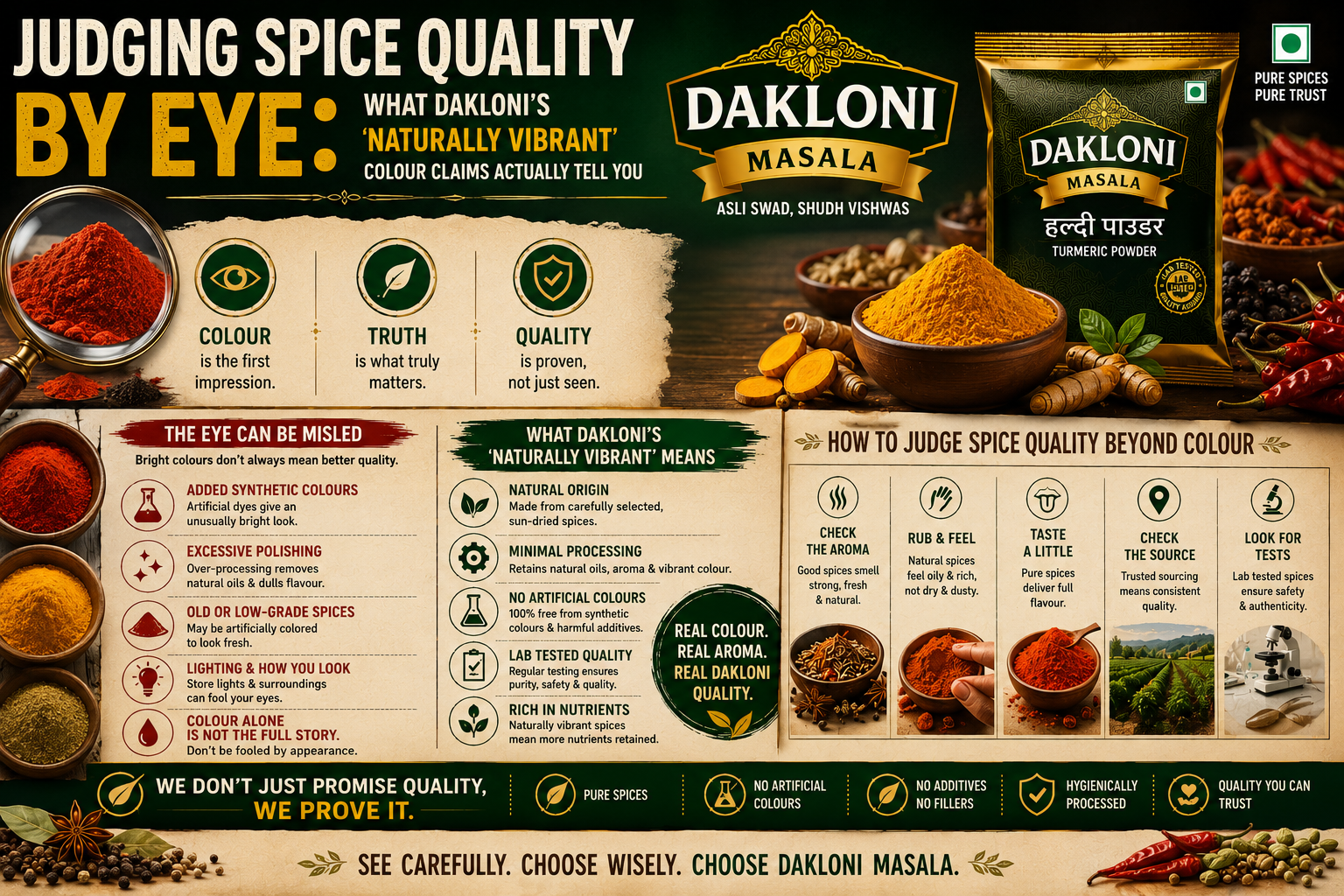
BHUBANESWAR — “Naturally Vibrant. Unmistakably Authentic.” is one of the recurring lines in Dakloni Masala’s marketing, paired with imagery of deep golden turmeric and rich red chilli powder mounded in bowls. Colour is one of the few quality cues a shopper can judge before opening a packet, and the Odisha-based brand, operated by Green Chocy Private Limited, leans on it heavily — but colour is also one of the easiest attributes to manipulate artificially, which is precisely why food regulators pay close attention to it.
Dakloni’s packaging carries a “No Added Colouring” badge across its Haldi and Red Chilli lines, a direct claim that the vivid colour in its products comes from the spice itself rather than an added dye. The company has not published lab verification of this claim, but the claim itself is specific enough to be checkable in principle, unlike vaguer language such as “authentic” or “premium.”
Why Colour Varies Naturally, Even Without Additives
Spice scientists note that natural colour intensity in turmeric and chilli varies significantly based on factors like the variety grown, soil and growing conditions, harvest timing, and drying method — meaning two genuinely additive-free batches of turmeric can still differ in shade from one harvest to the next. This makes colour an imperfect, though still useful, proxy for quality: a consistently vivid product across every batch could reflect careful sourcing, or it could reflect standardization through blending different harvests, or, in adulterated products elsewhere in the market, through added colourants.
Because Dakloni has not disclosed its sourcing regions or batch-blending practices, it is not possible to say from public information which of these explanations accounts for the consistency of colour shown in its marketing photography, which the company itself notes elsewhere is used “for illustrative purposes only” in some campaign creatives.
A Claim Worth More Than It Usually Gets Credit For
Compared with softer marketing language like “pure” or “traditional,” a specific “No Added Colouring” claim is a more meaningful commitment, since it addresses a documented adulteration risk in the wider Indian spice market rather than a vague quality assertion. Consumers who want assurance beyond the claim itself would need to look for independent lab testing, which Dakloni has not published for this report.
Frequently Asked Questions
Does natural spice colour vary between batches even without additives?
Yes — spice scientists note that colour intensity in turmeric and chilli varies naturally with growing conditions, variety and harvest, so colour alone is an imperfect quality indicator.
Has Dakloni Masala’s ‘No Added Colouring’ claim been independently verified?
No published third-party lab results were found for this report; the claim is self-reported by the company.
Visit- dakloni.in
Visit- dakloni.com
Facebook- Dakloni Masala
Instagram- @daklonimasala

BHUBANESWAR — Concerns about adulteration in India’s packaged-spice market are not new. Food-safety regulators and researchers have documented cases over the years involving artificial colouring agents used to brighten chilli and turmeric powders beyond their natural hue, as well as fillers such as starch, brick powder or other bulking agents used to stretch ground spices — problems that have periodically drawn regulatory scrutiny and consumer concern across the industry, particularly for loose or unbranded spices sold without traceable packaging.
Dakloni Masala, the Odisha-based brand operated by Green Chocy Private Limited, addresses this concern indirectly through its packaging language: “No Added Colouring,” “No Additives,” and “100% Natural” badges appear across its Haldi, Red Chilli and Dhaniya boxes. These claims speak directly to the categories of adulteration that have drawn regulatory attention in the wider industry, even though the company has not published third-party lab results confirming the absence of specific adulterants in its own products.
Branded Versus Loose Spices
Food-safety researchers generally note that adulteration risk is higher in loose, unbranded spice markets than in packaged, FSSAI-registered products, since branded manufacturers have both a regulatory obligation and a reputational incentive to avoid the kind of adulteration that draws enforcement action. That baseline gives packaged brands like Dakloni a structural advantage in consumer trust over loose-market alternatives, independent of any brand-specific purity claim.
That said, FSSAI registration alone — which Dakloni holds under license number 12026999000110 — is a baseline compliance credential rather than proof of routine, product-specific purity testing, a distinction covered in earlier reporting on the company’s regulatory standing.
What Verification Would Look Like
For a consumer wanting stronger assurance than packaging language alone, food-policy specialists point to specific, named third-party lab certifications or published test results as the more concrete form of verification, rather than general “pure” or “natural” claims. Dakloni has not published such results for its Haldi, Red Chilli or Dhaniya lines in the materials reviewed for this report, meaning its adulteration-related claims, like much of its broader marketing, rest on the company’s own representation.
Frequently Asked Questions
Has Dakloni Masala’s turmeric or chilli powder been independently tested for adulterants?
No published third-party lab results were found for this report; the company’s “No Added Colouring” and “100% Natural” claims are self-reported.
Is packaged, branded spice generally safer from adulteration than loose spice in India?
Food-safety researchers generally consider branded, FSSAI-registered packaged spices to carry lower adulteration risk than unbranded loose spice, though this is a general industry pattern rather than a specific claim verified for Dakloni.
India
We The Leaders Celebrates India’s 80th Independence Day with Flag Hoisting and Tree Plantation Drive in North Chennai
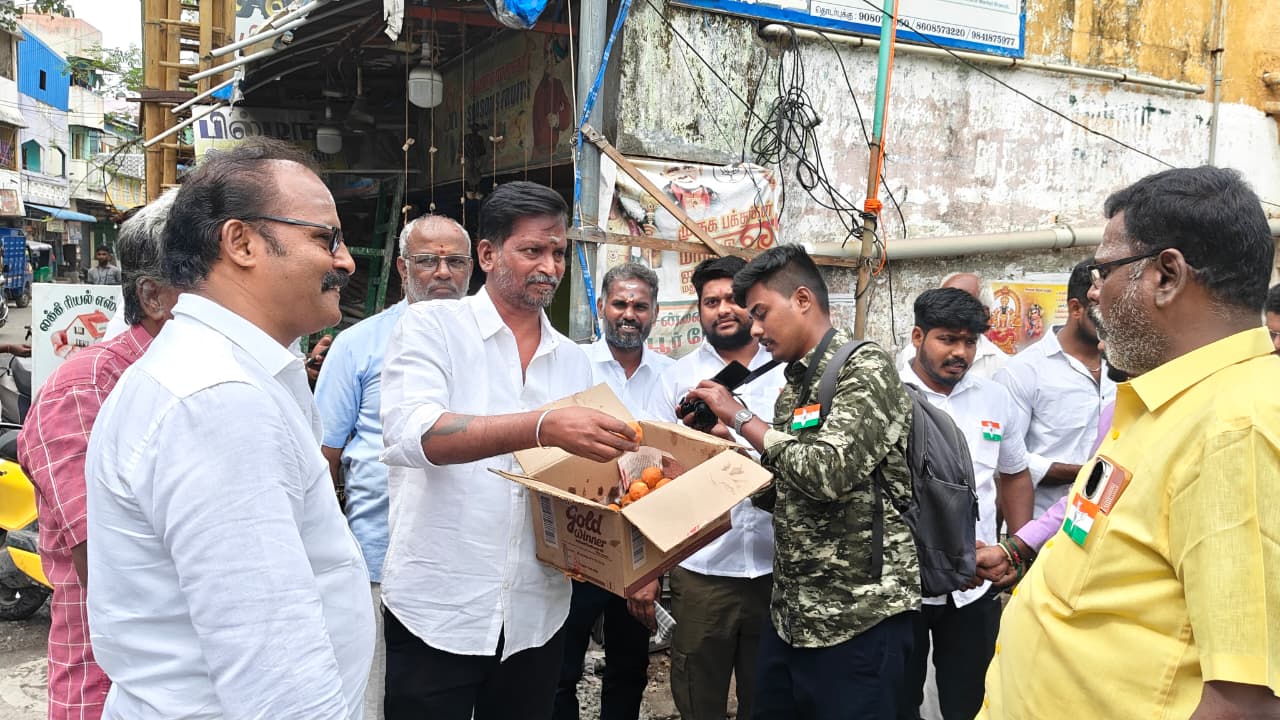
Sharma Nagar, North Chennai — In a spirited tribute to the nation’s 80th Independence Day, the organisation We The Leaders hosted a special commemorative event in Sharma Nagar, North Chennai, bringing together community members for an occasion marked by patriotism, unity and social responsibility.
The highlight of the celebration was the ceremonial hoisting of the National Flag, carried out with the honour and reverence befitting the milestone occasion. The event was organised by Saravanan and his team from Perambur, whose planning and coordination ensured a smooth and dignified celebration.
The gathering saw active participation from Barath, Shrish, Arumugam, Pandian and his team, alongside members of We The Leaders, all of whom came together to make the day a memorable one for the local community.
Adding a festive touch to the occasion, sweets were distributed among all attendees, fostering a spirit of togetherness and joy. In a meaningful gesture that extended the celebration’s significance beyond tradition, the organisation also distributed more than 200 tree saplings to those present. The initiative aimed to promote environmental awareness and encourage citizens to contribute to a greener, more sustainable future — linking the spirit of independence with a commitment to nation-building through ecological responsibility.
Speaking about the event’s success, organisers noted that the collective enthusiasm and dedication of every participant played a key role in making the celebration both meaningful and memorable.
The event concluded with the group’s rallying message, reflecting their commitment to community-driven progress:
“Let us change. Let us bring change.”
With initiatives like this, We The Leaders continues to demonstrate how national celebrations can be paired with grassroots action — blending patriotism with a tangible commitment to social and environmental good.


Judging Spice Quality by Eye: What Dakloni’s ‘Naturally Vibrant’ Colour Claims Actually Tell You

Adulteration Fears and the Indian Spice Market: Where Does Dakloni Masala Stand?

Nritya Prabha Season 4 Set to Bring 446 Dancers to Faridabad

Redfox Overseas: Customize Your Own Energy Drink and Stand Out in the Market

Zamzam Company CEO Chhote Bhai-Bade Bhai gave a grand welcome to Indian writer Devhari Sirvi in Dubai

Shikha Sharma: The Fashion Journalist, Blogger, and Plus-Size Model Taking the Industry by Storm
-
 Brandpost2 years ago
Redfox Overseas: Customize Your Own Energy Drink and Stand Out in the Market
-
 Brandpost2 years ago
Zamzam Company CEO Chhote Bhai-Bade Bhai gave a grand welcome to Indian writer Devhari Sirvi in Dubai
-
 Fashion2 years ago
Shikha Sharma: The Fashion Journalist, Blogger, and Plus-Size Model Taking the Industry by Storm
-
Entertainment1 year ago
Lucky Roxx’s “Yadav Ki Pukar” Goes Viral! Youth Celebrate Unity & Power
-

 Entertainment9 years ago
Meet Superman’s grandfather in new trailer for Krypton
-
Entertainment9 years ago
New Season 8 Walking Dead trailer flashes forward in time
-

 Brandpost2 years ago
From Local Hero to National Icon: Satyam Yadav’s Journey with TwentyOne
-
Uncategorized2 years ago
Hello world!