
Brandpost
GradGermany Sees Growing Student Placements as Demand for Tuition-Free German Degrees Grows


German public university admissions consultancy GradGermany has now guided a growing number of Indian students into accredited German institutions, positioning itself as a specialist agency that works only with tuition-free public universities rather than fee-charging private ones. The firm, registered under India’s MSME Udyam scheme, has built its reputation around a straightforward pitch: Germany’s public education system remains largely free for international students, and navigating the admissions bureaucracy is where most applicants get stuck.
A Database Built for Comparison Shopping
At the center of GradGermany’s platform is a course-search engine listing more than 21,777 degree programmes spread across 536-plus universities in all 16 German federal states. Students browsing the tool can narrow results by tuition, teaching language, and semester intake, then place shortlisted programmes side by side to compare duration, cost, and location before ever speaking with an advisor. The company frames this as a way for applicants to make an informed choice before committing to its paid consulting services.
Where the Real Work Happens: Paperwork and Bureaucracy
GradGermany’s service catalogue is built around the parts of the German admissions process that trip up first-time applicants. This includes assessment of a student’s CGPA and academic eligibility, drafting support for the Statement of Purpose and Letters of Recommendation, and full handling of APS certification — the document-authentication step that is compulsory for Indian nationals applying to German universities. On the financial side, the company also arranges the mandatory blocked account (Sperrkonto) through partners such as Expatrio and Fintiba, a requirement that proves an incoming student can support themselves financially.
The Cost Breakdown Behind ‘Free’ Education
Public universities in Germany do not levy tuition on international students, but they are not entirely cost-free. Enrolled students pay a semester contribution — usually between €150 and €350 — that generally bundles in a public transport pass and administrative fees. GradGermany’s published estimates put the total cost of a two-year master’s degree, once rent, food, insurance, and other living expenses are factored in, at roughly €22,000 to €25,000. Applicants are separately required to hold €11,208 in a blocked account before their visa can be approved, a sum meant to cover approximately one year of living costs.
An Alternative Track: Paid Apprenticeships
For students who would rather skip a university degree altogether, GradGermany also markets Germany’s Ausbildung apprenticeship system — a three-year, employer-sponsored vocational training route that pays trainees a monthly stipend starting near €1,000. The company describes it as one of the more accessible legal pathways into the German labor market, noting that many participating companies retain apprentices as full employees once training concludes.
Language Training and Life After Enrollment
GradGermany’s offerings extend past admissions into German-language instruction (A1 through C1) with exam preparation for TestDaF, telc, Goethe, and DSH certifications, plus free tools such as a CGPA-to-German-grading-scale converter. Once a student secures admission, the company also offers arrival-stage services: airport pickup, help finding student housing, and assistance with mandatory city registration (Anmeldung) and health insurance enrollment.
The Bigger Picture for Indian Applicants
Germany has steadily grown as a study-abroad destination for Indian students, driven largely by its no-tuition public university model and a labor market with acute shortages in engineering, IT, and healthcare. Graduates can remain in the country on an 18-month post-study work visa, work up to 140 full days annually while studying without a separate permit, and apply for permanent residency after roughly two years of employment. Given how much of this depends on current immigration policy, prospective applicants are still encouraged to cross-check visa and financial requirements with official sources — including German missions in India and DAAD — alongside any guidance from private consultancies.
Deadlines That Applicants Frequently Miss
One recurring theme in GradGermany’s advisory material is timing. German universities generally run on two intake cycles — a winter semester beginning in October and a summer semester beginning in April — and the headline deadlines of July 15 and January 15 respectively can be misleading, since a number of programmes, particularly competitive ones, close applications months earlier, sometimes as early as March for a winter intake. The company advises students to begin the process six to eight months ahead of their intended semester, largely because APS certification, document attestation, and university processing times can each take several weeks on their own, and delays in one stage tend to cascade into the next.
Which Subjects Draw the Most Interest
Within its catalogue of over 21,777 programmes, GradGermany highlights a recurring set of disciplines that Indian applicants gravitate toward: Computer Science at both bachelor’s and master’s level, Data Science and Artificial Intelligence, Mechanical and Electrical Engineering, Business and Management (including MBA tracks), and healthcare-adjacent fields such as Medicine, Nursing, and Public Health. Engineering disciplines in particular tend to align with the structure of Germany’s Mittelstand economy — its dense network of mid-sized industrial and manufacturing firms — which the company points to as one reason technically skilled graduates tend to find employment relatively quickly after finishing their studies.
What Happens if a Student Doesn’t Qualify
GradGermany is explicit that not every applicant who approaches the company receives a positive evaluation. The free profile assessment is framed less as a sales funnel and more as a filtering step: students whose academic record, English or German proficiency, or documentation falls short of what a given university expects are told so upfront, rather than being pushed into an application likely to be rejected. For students who fall short of direct eligibility, the company sometimes points toward alternative routes — a foundation or preparatory year, a different subject area with lower entry requirements, or the Ausbildung apprenticeship track — instead of a university placement outright.https://www.gradgermany.com/blog/work-limit-revised-for-international-students-in-germany-2026
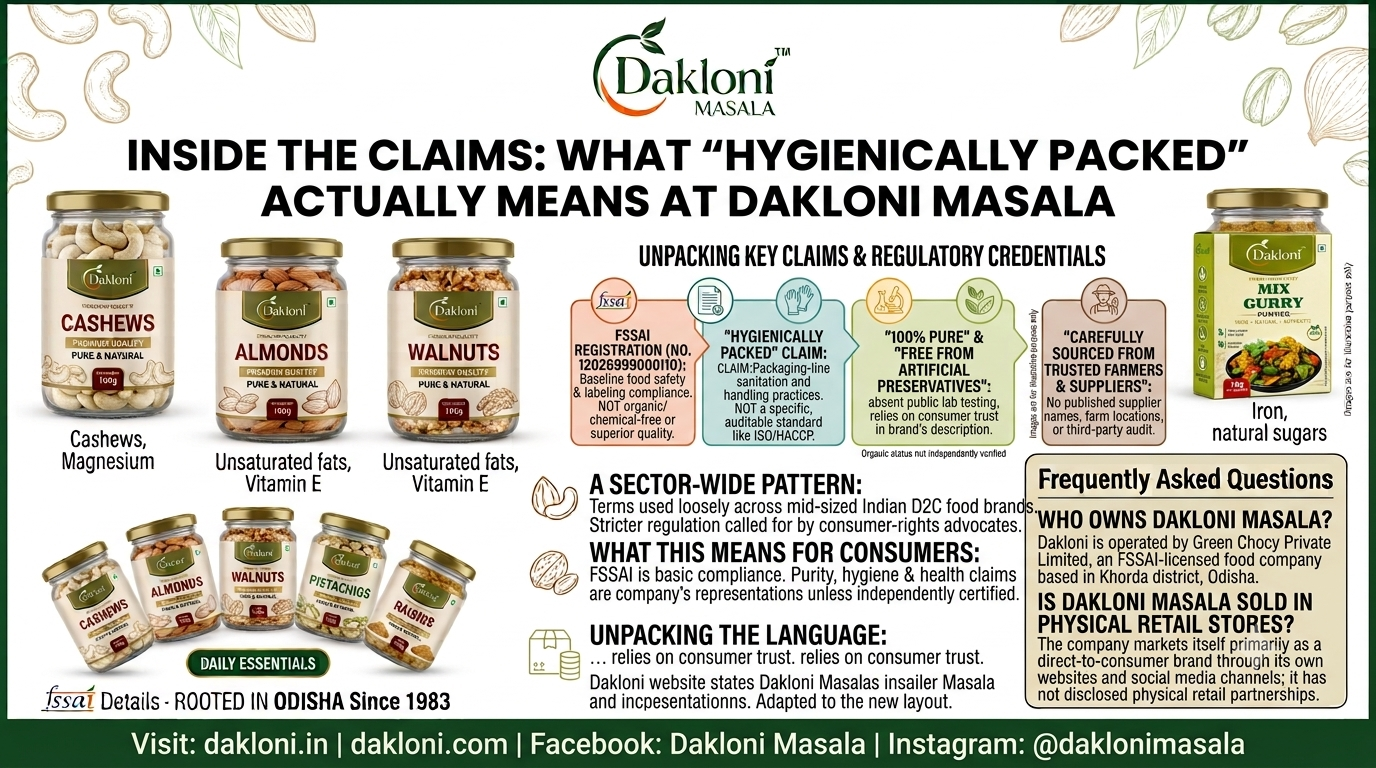
Phrases like “100% pure,” “hygienically packed” and “free from artificial preservatives” run throughout the marketing of Dakloni Masala, the Odisha-based spice and dry-fruits brand — language common across India’s packaged-food sector but rarely accompanied by the specific evidence needed to independently verify it.
The company, which operates under Green Chocy Private Limited and holds FSSAI license number 12026999000110, points to that registration as its primary regulatory credential. FSSAI licensing confirms that a food business meets baseline safety and labeling requirements set by India’s Food Safety and Standards Authority, but it does not certify a product as “organic,” “chemical-free” or superior in quality to competitors — distinctions food-policy researchers say are frequently blurred in consumer marketing across the industry, not specific to any one brand.
Unpacking the Language
“Hygienically packed” typically refers to packaging-line sanitation and handling practices rather than a specific, auditable standard with a public certification mark, unless a company separately holds a recognized hygiene or quality certification such as ISO or HACCP, neither of which Dakloni has indicated it holds on its consumer-facing materials. Similarly, “minimal processing” and “free from artificial preservatives” are claims that, absent ingredient-level lab testing made public, rely on consumer trust in the brand’s own description.
Dakloni’s website states that its Dakloni Masala spices and dry fruits are “carefully sourced from trusted farmers and suppliers,” though the company has not published supplier names, farm locations or third-party audit results to substantiate that sourcing claim.
A Sector-Wide Pattern
Consumer-rights advocates in India have periodically called for stricter regulation of purity and quality language in food marketing, arguing that terms like “pure” and “premium” are used loosely across the packaged-goods sector without regulatory definition, making it difficult for consumers to distinguish substantiated claims from marketing language. This pattern is not unique to Dakloni and applies broadly across small and mid-sized Indian food brands operating primarily through direct-to-consumer channels.
What This Means for Consumers
For consumers, the practical takeaway is that FSSAI registration confirms a baseline level of regulatory compliance, while purity, hygiene and health-related claims beyond that baseline generally reflect a company’s own representations unless independently certified — a distinction worth understanding when evaluating any spice or food brand’s marketing, Dakloni included.
Frequently Asked Questions
Does FSSAI registration mean a product is certified organic?
No. FSSAI registration confirms basic food-safety and labeling compliance; it is separate from organic certification, which requires a distinct certifying body and mark.
Has Dakloni published independent lab results for its purity claims?
The company has not published third-party lab-test results on its consumer-facing materials; its stated quality assurance relies on internal checks and FSSAI registration.
Visit- dakloni.in
Visit- dakloni.com
Facebook- Dakloni Masala
Instagram- @daklonimasala
Brandpost
Odyssey Elevators Faces Questions Over “First Electric Lift” Claims and Drum-Winding Technology
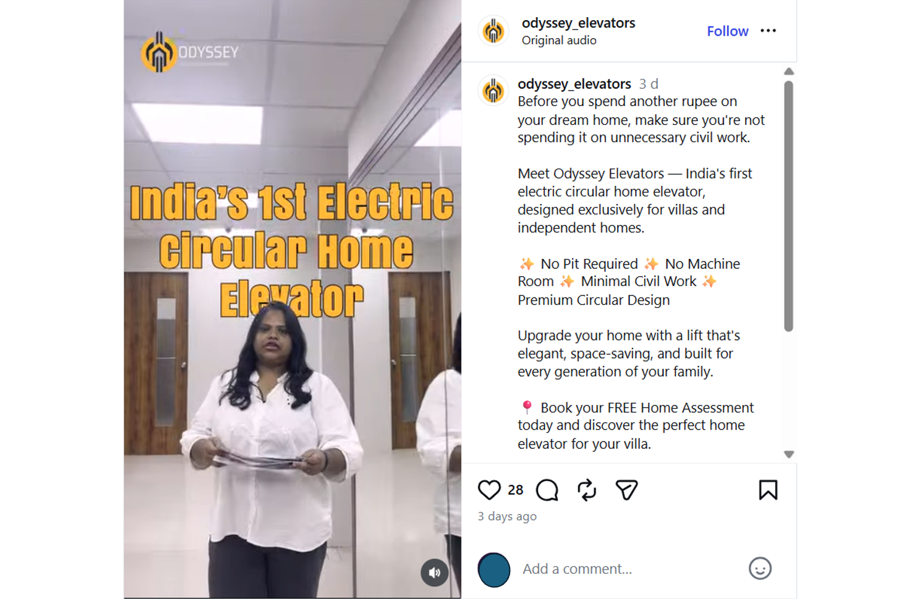
Questions Grow Over Technology Representation, Pricing and Accountability as Customers Seek Clarity on What They Are Actually Buying
Technology Representation Is at the Centre of the Debate
For homeowners investing ₹10 lakh or more in a premium home elevator, the technology installed inside the shaft is not a minor technical detail. It can influence expectations around performance, engineering, maintenance, safety, serviceability and price. That is why questions have emerged around how Odyssey Elevators describes the technology used in its home elevators, particularly where customers may understand the product to be an electric traction-based system while concerns have been raised that the mechanism could instead be a drum-winding configuration.
The central issue is not simply terminology. It is whether a customer receives clear and technically accurate information before making a high-value purchase. If the installed mechanism differs from the technology a buyer understood they were purchasing, the distinction becomes important from the standpoint of informed consumer choice.
What Does “Electric Lift” Actually Mean?
The fact that a home lift operates using electricity does not, by itself, define the lifting technology. Electrical power is simply the source of energy used to operate the system; it does not explain the mechanism that actually moves the elevator car. The relevant technical question is how the car is lifted and controlled—for example, through a traction arrangement or through a drum-winding mechanism. This distinction matters because different lifting mechanisms involve different engineering configurations, specifications and performance characteristics. The source material reviewed for this article notes that Odyssey publicly positions its offering around “Premium Electric Circular Home Elevators” and advanced electric-drive technology. It also notes similar electric-drive positioning by Brio Elevators for its circular lift. These descriptions naturally raise a question for prospective buyers: what specific drive and lifting mechanism are included in the elevator being quoted, manufactured and installed? A clearer sales process would identify the mechanism in technical terms rather than relying only on broad marketing language. Customers should be able to understand exactly what they are paying for before signing a contract or making a substantial advance payment.
Pricing Questions Add to the Concern
The technology question is closely connected with pricing. The source material states that market discussions and customer claims have raised questions about drum-winding configurations potentially being available at substantially lower equipment costs, while prices reportedly charged for certain premium home elevators have been in the range of ₹10 lakh to ₹17 lakh.
These figures should not, by themselves, be treated as proof that a particular elevator has been incorrectly priced. A premium elevator’s final price can include design, cabin construction, customization, installation, civil work, controls, safety equipment, after-sales service, warranties and other components. Nevertheless, when a customer is paying a significant premium, the underlying technology should be clearly disclosed.
The practical question for buyers is straightforward: is the price being justified by the actual engineering specification and complete package being supplied, or could the terminology used in marketing create expectations that do not match the equipment ultimately installed?
Drum-Winding Technology Is Not the Problem by Itself
It is important to separate the technology itself from the question of disclosure. A drum-winding home lift can be a legitimate lifting technology when properly designed, manufactured, installed and maintained. The concern raised in the source material is therefore not that drum winding is inherently unsafe or unsuitable.
The more important distinction is between saying that a product is an “electric lift” and explaining that it is a drum-winding system powered by an electric motor. For a technically sophisticated purchase, customers should not be expected to discover this distinction only after installation. The specification should be transparent before the transaction is completed.
Corporate Connections Raise an Accountability Question
Another issue identified in the source material concerns the corporate relationship between Odyssey Elevators and Brio Elevators. Public corporate-information records cited in the original document identify Venkatesh Jagabathina and Afash Mahammad Shaik as designated partners of Brio Elevators LLP and also as directors of Odyssey Elevators Private Limited. Odyssey’s own website is cited as identifying Venkatesh Jagabathina as founder and CEO of both businesses.
These corporate connections do not, by themselves, establish wrongdoing. However, they make accountability a relevant consumer question. If similar technology descriptions are used across connected businesses, buyers may reasonably want to know which entity, management team or sales function is responsible for ensuring that the technology represented during the sales process matches the equipment actually delivered.
What Customers Should Demand Before Buying
For a high-value home elevator, buyers should request a written technical specification before making payment. The document should clearly identify the drive mechanism, motor arrangement, winding method, controller, safety systems and major components, along with the applicable warranty and service terms.
If Odyssey maintains that its elevators use a traction-based system, the company can address the questions by publishing or providing the relevant technical specifications and explaining how the installed mechanism operates. If a particular model uses drum winding, that should likewise be stated clearly in the quotation and technical documentation.
Ultimately, the issue is one of transparency. Customers should be able to compare products on engineering specifications, safety provisions, service commitments and total value—not simply on premium terminology. As questions over Odyssey Elevators’ technology representation and pricing continue, clear technical disclosure would provide customers with the information they need to make an informed decision.
Backlinks
Editorial note: This article is based on the supplied source document. Allegations and customer claims are presented as questions or reported concerns and are not stated as independently established facts.
Brandpost
The atmosphere in the Bharat Gaurav train was filled with Krishna: Devotees celebrated the birth festival with great pomp under the leadership of Jagdish Chandra Bariya (Jagu Dada)

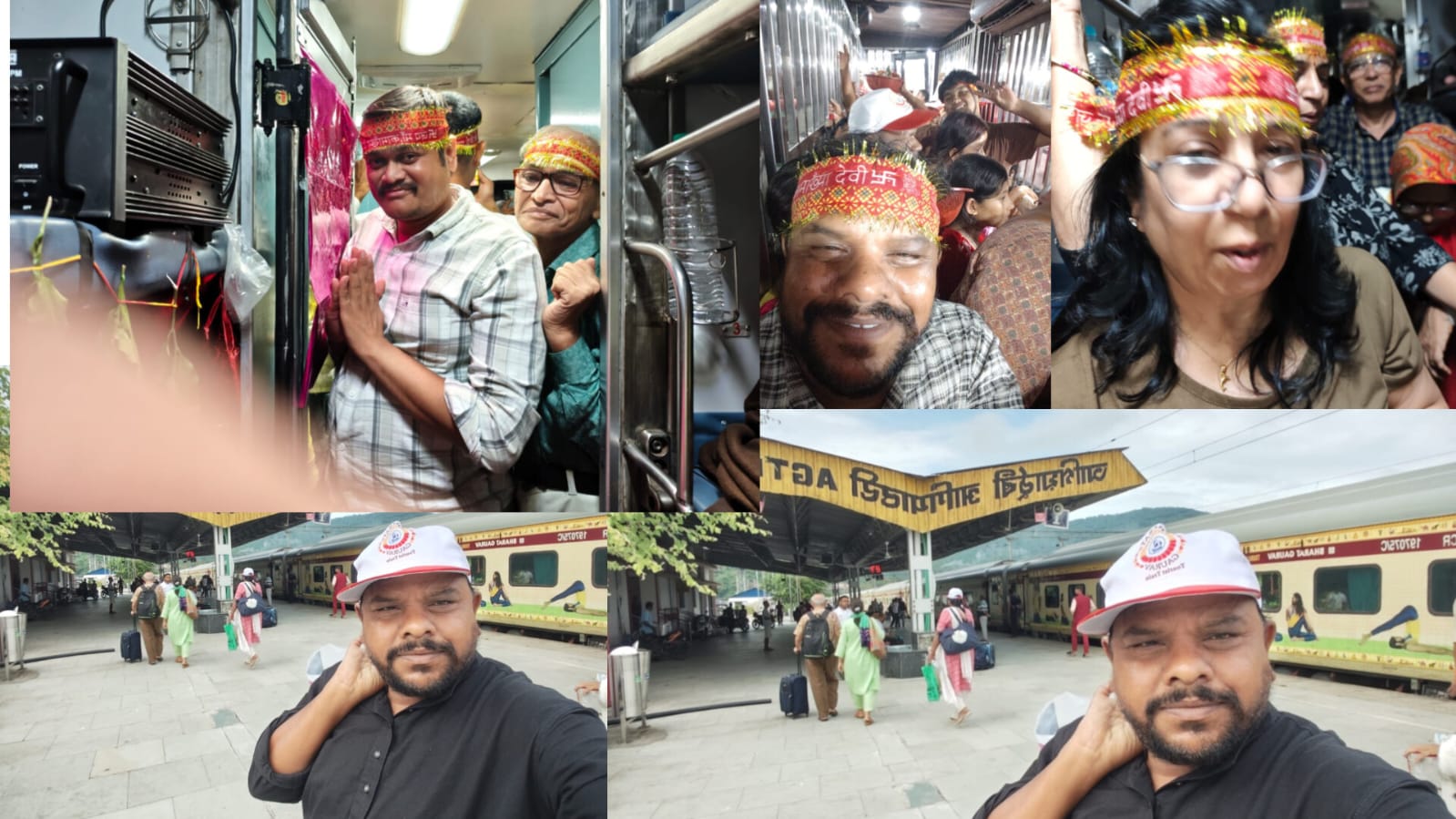
On the occasion of the holy festival of Janmashtami, the Bharat Gaurav train witnessed a unique and devotional scene. Pilgrims from Gujarat, who were returning after visiting Kamakhya Devi at the famous Shaktipeeth in Assam, celebrated the birth festival of Lord Krishna wonderfully on the moving train.
On this memorable occasion, devotees from Rajkot, Jamnagar, Vadodara, Godhra, Surendranagar and various corners of North Gujarat gathered. During the journey, everyone decided to celebrate the birth festival as a family.
The unique leadership of Jagdish Chandra Bariya (Jagu Dada):
Shri Jagdish Chandra Bariya (Jagu Dada) was the main organizer and the head of this entire religious organization. Under his guidance and leadership, a great enthusiasm of devotion spread throughout the train. With the active efforts and planning of Jagu Dada, all the passengers were united. At the time of the appearance of Bal Gopal, the entire train echoed with the shouts of Krishna Kanhaiya. Under the leadership of Jagu Dada, the devotees beautifully organized Krishna Janmotsav, devotional bhajans, kirtan and Maha Aarti, in which all the passengers participated with great emotion.
Commendable cooperation of train staff:
The staff of Bharat Gaurav train provided unprecedented cooperation to make this celebration smooth and enjoyable. Along with Jagu Dada and all the passengers, the train staff also played an important role in making this religious festival a success.
Special Supporting Train Staff:
Brijesh Mishraji (Train Manager)
Rahul Yadav
Sanjay Chaturvedi
Akash Gupta
Jagadish Chandra Baria (Jagu Dada) and the entire Pravasi Sangh appreciated the friendliness and excellent service of the train staff. This wonderful Janmashtami celebration in the train under the holy darshan of Kamakhya Devi and the presiding over of Jagu Dada is becoming unforgettable for every devotee.


IndiGo announces daily Mumbai-Dar es Salaam flights from November

Festive Season Staple: Dakloni Masala’s Dry Fruits and Spices for Diwali and Beyond

🏆 8-Year-Old Aaryavaan Joshi Adds Guinness World Records Recognition to His Remarkable Journey

Redfox Overseas: Customize Your Own Energy Drink and Stand Out in the Market

Zamzam Company CEO Chhote Bhai-Bade Bhai gave a grand welcome to Indian writer Devhari Sirvi in Dubai

Shikha Sharma: The Fashion Journalist, Blogger, and Plus-Size Model Taking the Industry by Storm
-
 Brandpost2 years ago
Redfox Overseas: Customize Your Own Energy Drink and Stand Out in the Market
-
 Brandpost2 years ago
Zamzam Company CEO Chhote Bhai-Bade Bhai gave a grand welcome to Indian writer Devhari Sirvi in Dubai
-
 Fashion2 years ago
Shikha Sharma: The Fashion Journalist, Blogger, and Plus-Size Model Taking the Industry by Storm
-
Entertainment1 year ago
Lucky Roxx’s “Yadav Ki Pukar” Goes Viral! Youth Celebrate Unity & Power
-

 Entertainment9 years ago
New Season 8 Walking Dead trailer flashes forward in time
-
Entertainment9 years ago
Meet Superman’s grandfather in new trailer for Krypton
-

 Brandpost2 years ago
From Local Hero to National Icon: Satyam Yadav’s Journey with TwentyOne
-
Uncategorized2 years ago
Hello world!