
India
Dakloni Masala: How a 1983 Odisha Spice Legacy Is Powering India’s Growing D2C Kitchen Movement

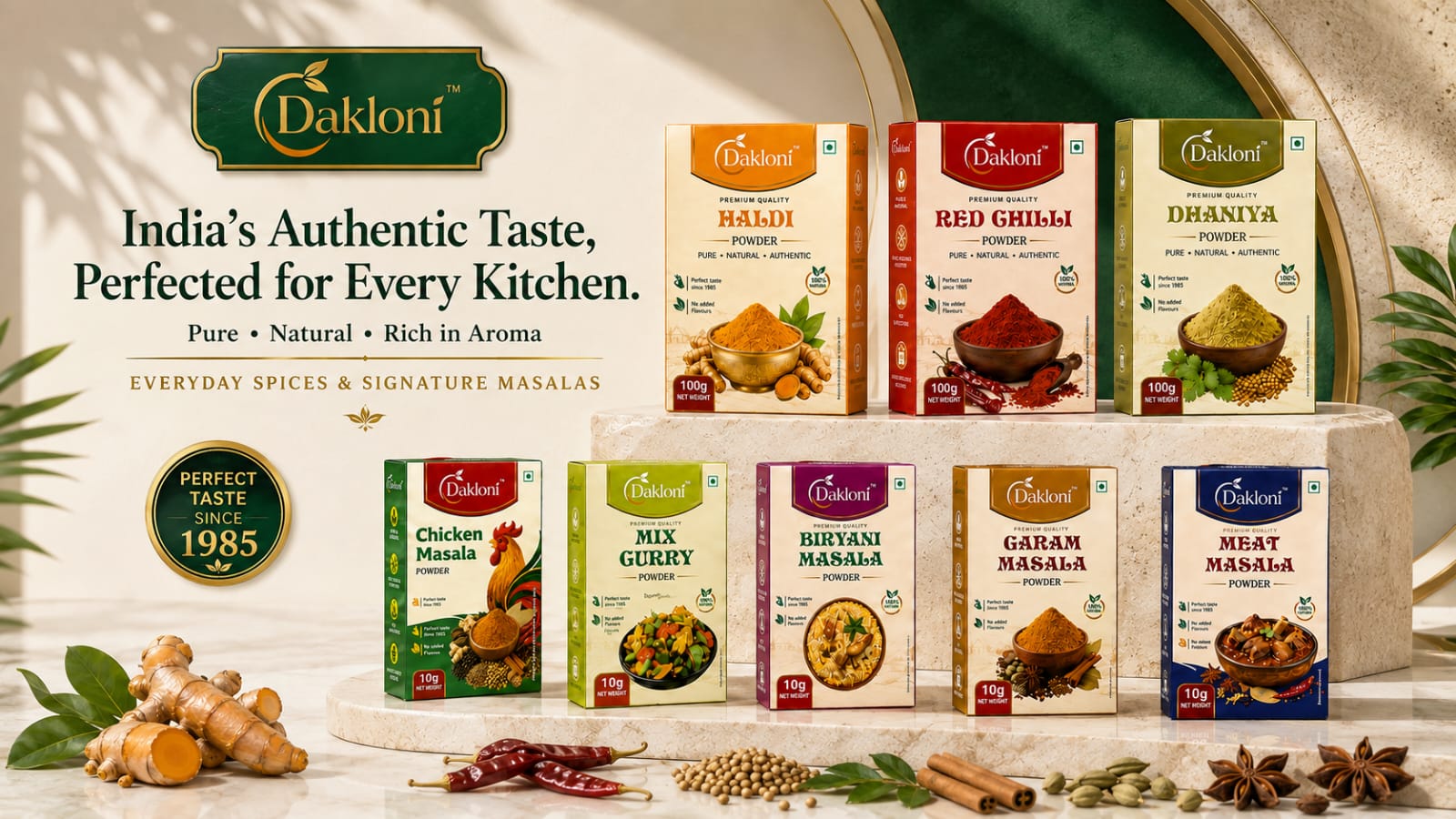
Long before packaged spice blends became a shelf staple in Indian homes, families in Odisha were grinding, sun-drying and hand-mixing their masalas in small batches, guided by recipes passed down through generations. That is the world Dakloni Masala grew out of. Founded in 1983, the brand has spent more than four decades supplying households across Odisha and, more recently, the rest of India with spice blends rooted in regional tradition. Today, under its parent company Green Chocy Pvt Ltd, Dakloni Masala is positioning itself as one of India’s emerging direct-to-consumer (D2C) spice brands, selling straight from its own website to kitchens nationwide.
Odisha Roots, National Ambitions
Odisha’s cuisine leans on subtle, layered spicing rather than sharp heat, and Dakloni Masala’s blends reflect that heritage. The brand describes its process as staying close to how spices were traditionally prepared in the region — cleaned, dried and ground in a way that preserves natural aroma rather than masking it with fillers. As the company has grown, it has carried that regional identity forward while widening its distribution to reach kitchens well beyond Odisha’s borders, part of a broader trend of regional Indian food brands going national through online channels.
What’s Inside the Dakloni Masala Range
The current product line-up covers the essentials that anchor most Indian meals, alongside a curated dry fruits selection:
- Turmeric Powder — used daily across Indian cooking for its colour, earthy flavour and long-standing place in home remedies.
- Red Chilli Powder and Kashmiri Red Chilli Powder — the former for everyday heat, the latter prized for its deep colour with a comparatively milder bite.
- Garam Masala — a blended spice mix used to finish curries, dals and vegetable preparations with warmth and depth.
- Garlic Powder and Onion Powder — pantry staples that add quick flavour to marinades, gravies and snacks without the prep time of fresh produce.
- Dry Fruits — including cashews, almonds, walnuts, pistachios and raisins, sold as part of the brand’s broader pantry offering.
Quality Claims: What Dakloni Masala Says About Its Standards
Dakloni Masala markets its spices as organic and free from artificial additives, positioning purity as its central promise to customers. The brand states that its sourcing, cleaning and packaging processes follow strict hygiene protocols, from selecting raw spices to sealing the final packet, so that what reaches a customer’s kitchen is as close as possible to what left the processing unit. For a category where adulteration and inconsistent quality have long been consumer concerns in India, this emphasis on traceable, hygienic processing is central to how the brand differentiates itself in a crowded spice market.
Why Dry Fruits Are Part of the Line-Up
Alongside spices, Dakloni Masala also sells a range of dry fruits, which nutritionists commonly point to as a convenient way to add fibre, protein and micronutrients to a daily diet. Almonds and walnuts are frequently associated with heart and brain health, cashews contribute minerals such as magnesium and zinc, pistachios offer plant protein along with antioxidants, and raisins are often used as a natural way to add sweetness while supplying iron and potassium. By bundling dry fruits with its spice range, Dakloni Masala is tapping into the same pantry-stocking behaviour that drives spice purchases — households buying once for ingredients they will use through the month.
Green Chocy Pvt Ltd and the D2C Push
Dakloni Masala operates under Green Chocy Pvt Ltd, the parent company steering the brand’s expansion. Rather than relying solely on traditional retail counters, the company has built a direct-to-consumer model, selling through its own website so customers can order spice blends and dry fruits directly and have them delivered to their door. This approach mirrors a wider shift among Indian food and grocery brands, which are increasingly using D2C websites and social media to reach customers directly, cut out layers of distribution and build a closer relationship with the households who buy from them repeatedly.
A Legacy Brand Adapting to a Digital-First Market
What makes Dakloni Masala’s story notable is the combination of a four-decade regional legacy with a distinctly modern distribution strategy. Many heritage spice makers in India remain confined to local markets, while newer, venture-backed D2C brands often lack a long-standing production history to point to. Dakloni Masala is attempting to sit at the intersection of both worlds: leaning on its 1983 origins in Odisha as a mark of authenticity, while using an e-commerce-led, D2C structure to compete for a national audience that increasingly researches and buys pantry staples online rather than at a neighbourhood store.
Where to Find Dakloni Masala
Customers can explore the full Dakloni Masala range and place orders directly through the brand’s official websites:
The brand also maintains an active presence on social media:
As Indian households continue to shift a share of their grocery spending online, brands like Dakloni Masala illustrate how a decades-old, regionally rooted spice maker can reposition itself for a national, digitally connected customer base without losing the traditional identity that built its reputation in the first place.


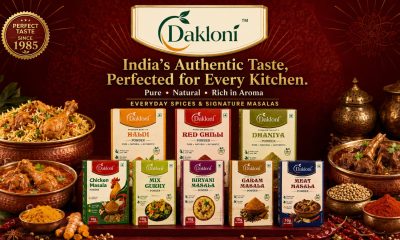

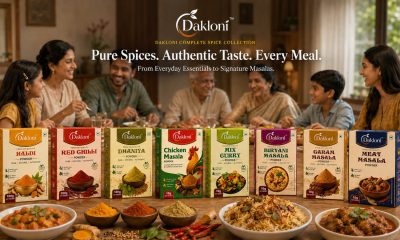

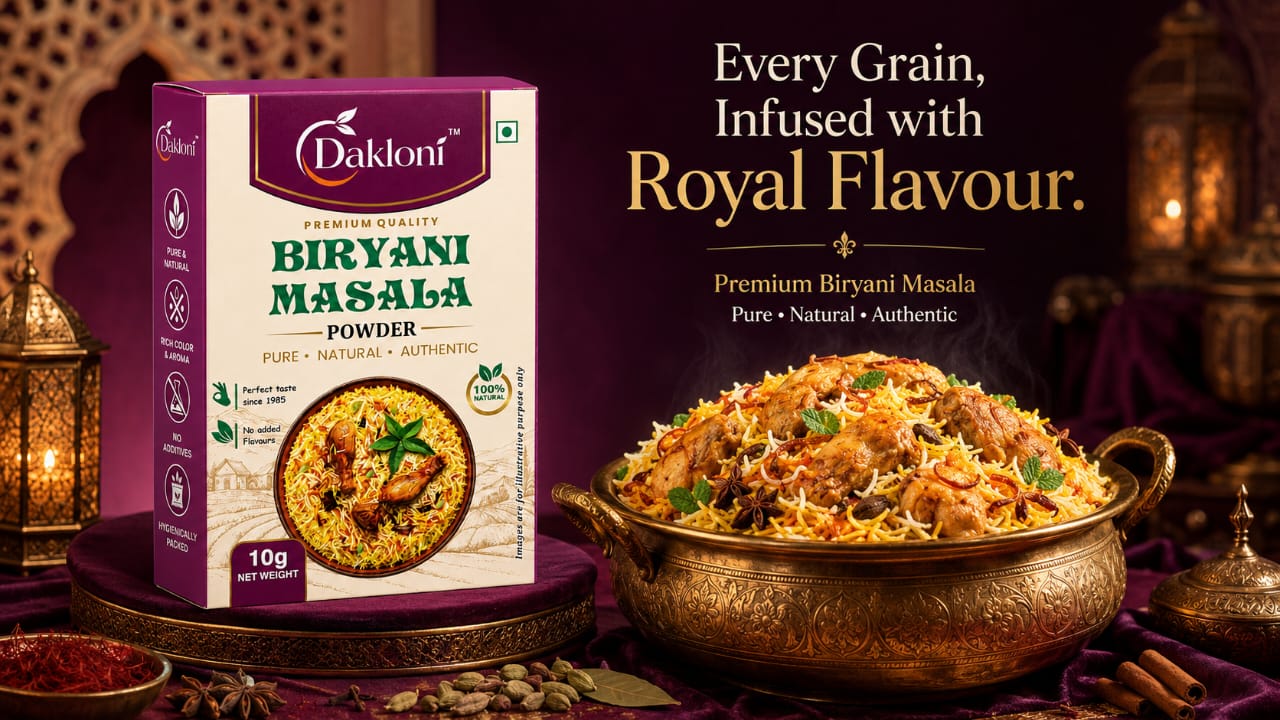
BHUBANESWAR — Dakloni Masala markets its Chicken Masala as an “aromatic blend of 13 spices for authentic chicken curry,” a specific-sounding claim that appears on the product’s packaging and marketing creatives. Its Meat Masala carries similar language. The Odisha-based brand, operated by Green Chocy Private Limited, has not published the actual list of the 13 spices or their proportions in the blend.
Naming a precise spice count is a common device in India’s packaged-masala category, used by both large national brands and smaller regional entrants to signal complexity and craftsmanship without necessarily disclosing a full recipe — proprietary blend ratios are typically treated as trade secrets industry-wide, so Dakloni’s non-disclosure is not unusual in itself.
Why the Number Matters to Shoppers
Spice-blend formulation affects flavour, heat level and how a masala performs across different regional cooking styles, and shoppers comparing packaged masalas often use ingredient lists, when available, to judge freshness or filler content — for instance, whether a blend leans on cheaper starch or salt fillers rather than whole spices. Dakloni’s packaging states “No Additives” and “No Added Flavours,” which speaks to what is excluded, but does not itself confirm the composition or ratio of the 13 named spices.
Standard packaging for pre-packaged food in India requires an ingredient list in descending order by weight; whether Dakloni’s boxes carry this listing on panels not captured in the marketing creatives reviewed for this report could not be confirmed.
A Category Where Comparison Is Difficult
Because blend ratios are rarely public across the category, comparing Dakloni’s Chicken Masala or Meat Masala against competitors on formulation grounds is difficult for an outside observer; most comparisons by consumers end up resting on taste testing and repeat-purchase behaviour rather than published specification. Food-industry analysts note this is one reason smaller masala brands lean heavily on origin and purity storytelling — it is easier to communicate and verify at a glance than a 13-ingredient ratio.
Frequently Asked Questions
Does Dakloni Masala publish its Chicken Masala’s exact spice list?
The company states its Chicken Masala is a blend of 13 spices but has not published the specific ingredients or their proportions in materials reviewed for this report.
Is a 13-spice claim common in Indian masala brands?
Naming a specific spice count is a common marketing device across the category, used by both large and small brands, and does not by itself indicate anything unusual about Dakloni’s formulation.
Visit- dakloni.in
Visit- dakloni.com
Facebook- Dakloni Masala
Instagram- @daklonimasala
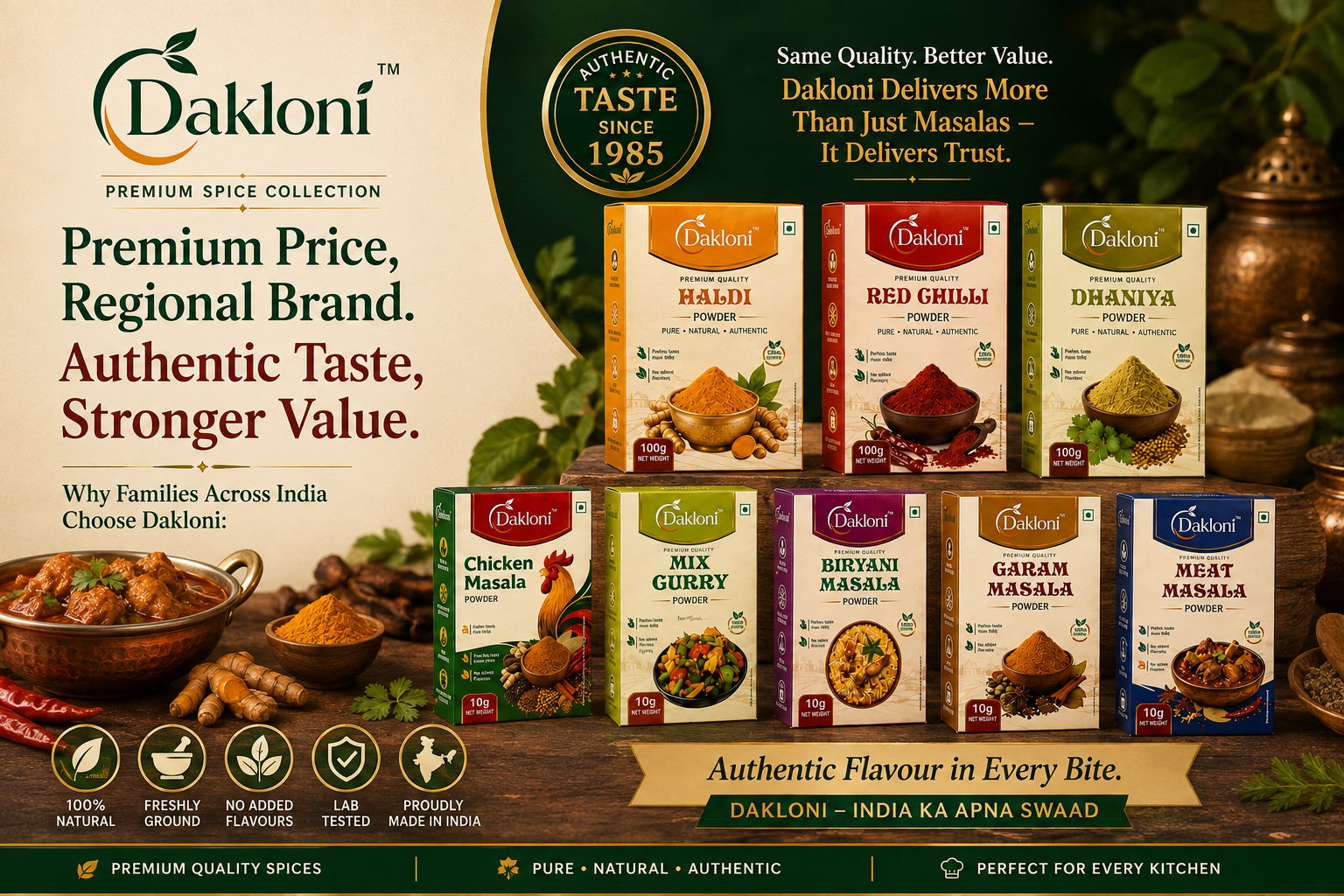
BHUBANESWAR — Dakloni Masala sells almost entirely through its own websites and social media channels, a distribution model that has become increasingly common among India’s newer food brands as online grocery adoption grows, and one that shapes nearly every aspect of how the Odisha-based company markets itself.
The brand, run by Green Chocy Private Limited, maintains a presence on Facebook and Instagram alongside its two web properties, dakloni.in and dakloni.com, using both platforms to reinforce its purity and tradition narrative through product photography and brand storytelling, according to a review of its public channels.
Building Trust Without a Store Shelf
For D2C food brands, the absence of a physical retail presence means trust has to be built almost entirely through digital content, customer reviews and word of mouth rather than the implicit vetting that comes from being stocked by a known retailer. Marketing researchers who study India’s D2C sector say this makes consistent, credible storytelling — origin claims, quality language, founder narrative — disproportionately important to conversion, since it often substitutes for the reassurance a shopper would otherwise get from a familiar store.
Dakloni has not disclosed follower counts, engagement metrics, or website traffic figures, and it is not possible from public information to assess how large its online customer base actually is relative to its marketing footprint.
A Model With Limits
The D2C-only approach also caps how quickly a brand can scale compared with securing national retail distribution, since growth depends on digital marketing reach and repeat online orders rather than shelf placement. Whether Dakloni intends to pursue retail or marketplace partnerships alongside its own channels has not been publicly stated by the company.
Frequently Asked Questions
Does Dakloni Masala sell through retail stores?
Based on available information, the company operates primarily as a direct-to-consumer brand through its own websites and social media, rather than through a disclosed retail network.
How does Dakloni Masala market itself online?
The brand uses its website, Facebook and Instagram to communicate its purity and traditional-sourcing narrative, though it has not published engagement or traffic data.
Visit- dakloni.in
Visit- dakloni.com
Facebook- Dakloni Masala
Instagram- @daklonimasala
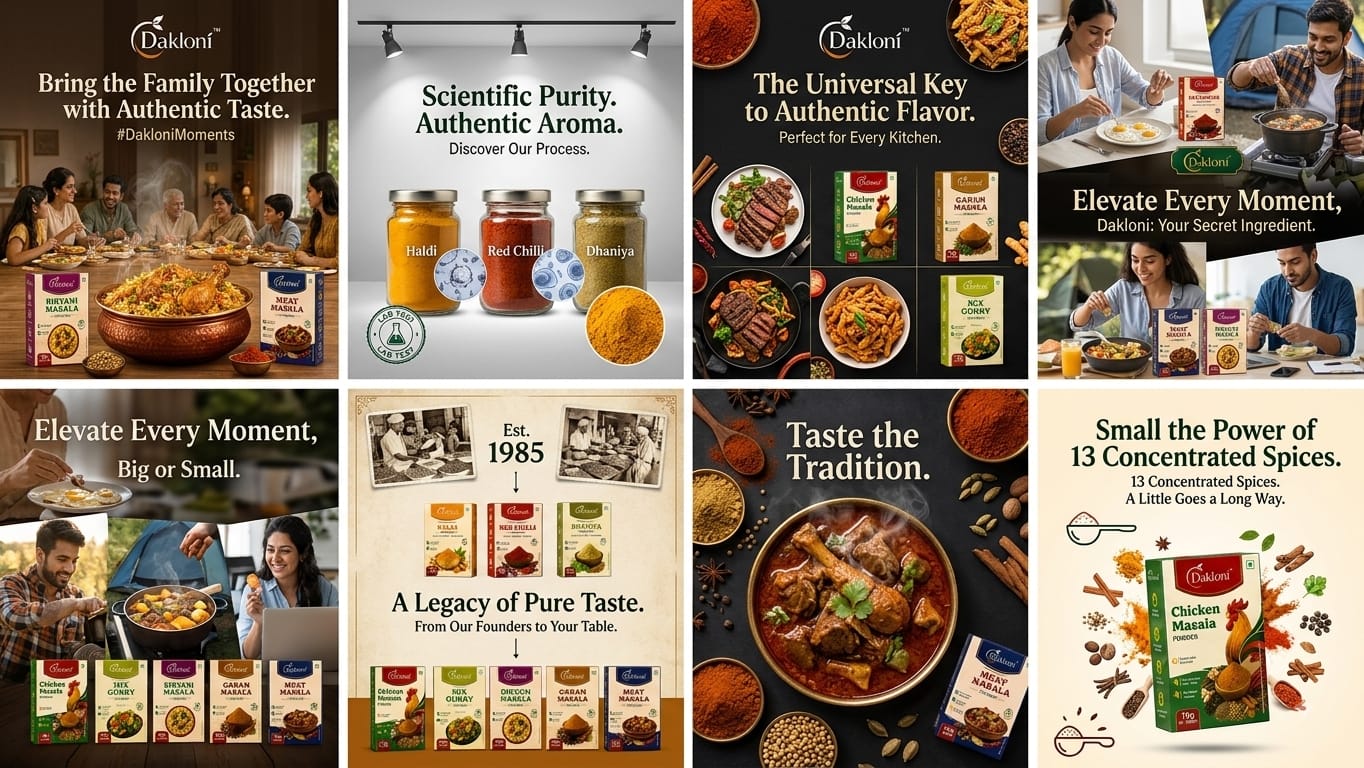
BHUBANESWAR — Having built its identity around Odisha roots and a direct-to-consumer sales model, Dakloni Masala faces a familiar question for regional Indian food brands at this stage: whether and how to expand beyond its home state and its own web properties without diluting the story that differentiates it from national competitors.
The company, operated by Green Chocy Private Limited, has not publicly outlined expansion plans, including whether it intends to pursue listings on major e-commerce marketplaces such as Amazon or Flipkart, enter organized retail, or expand its product categories further beyond its current spice, dry-fruit, makhana and grocery lines.
The Marketplace Question
Many D2C food brands in India eventually list on large e-commerce marketplaces to reach customers beyond their own website traffic, a move that can accelerate growth but typically comes with reduced margins, marketplace fees, and less control over brand presentation compared with direct-to-consumer sales. Whether Dakloni sees marketplace expansion as consistent with its purity-and-tradition positioning, or a compromise of it, is not addressed in the company’s public materials.
Retail analysts note that regional brands attempting to scale nationally often face a trade-off between preserving the authenticity narrative that built their initial customer base and the broader distribution needed to compete meaningfully with established national players.
An Unwritten Next Chapter
For now, Dakloni’s growth trajectory — including revenue, order volumes, and any funding or investment activity — remains undisclosed, leaving its longer-term prospects, like much of its public narrative, resting largely on the company’s own claims rather than independently verifiable figures.
Frequently Asked Questions
Is Dakloni Masala planning to sell on Amazon or Flipkart?
The company has not publicly stated plans to list on major e-commerce marketplaces; it currently sells primarily through its own websites and social channels, based on available information.
Has Dakloni Masala raised outside investment?
No public information on funding or investment activity was found for this report.
Visit- dakloni.in
Visit- dakloni.com
Facebook- Dakloni Masala
Instagram- @daklonimasala


Thirteen Spices, One Blend: What Goes Into Dakloni’s Chicken and Meat Masala Claims

PM Modi announces nuclear, chip manufacturing push on Independence Day

India elect to bat after Gill wins toss in Galle Test

Redfox Overseas: Customize Your Own Energy Drink and Stand Out in the Market

Zamzam Company CEO Chhote Bhai-Bade Bhai gave a grand welcome to Indian writer Devhari Sirvi in Dubai

Shikha Sharma: The Fashion Journalist, Blogger, and Plus-Size Model Taking the Industry by Storm
-
 Brandpost2 years ago
Redfox Overseas: Customize Your Own Energy Drink and Stand Out in the Market
-
 Brandpost2 years ago
Zamzam Company CEO Chhote Bhai-Bade Bhai gave a grand welcome to Indian writer Devhari Sirvi in Dubai
-
 Fashion2 years ago
Shikha Sharma: The Fashion Journalist, Blogger, and Plus-Size Model Taking the Industry by Storm
-
Entertainment1 year ago
Lucky Roxx’s “Yadav Ki Pukar” Goes Viral! Youth Celebrate Unity & Power
-

 Entertainment9 years ago
Meet Superman’s grandfather in new trailer for Krypton
-
Entertainment9 years ago
New Season 8 Walking Dead trailer flashes forward in time
-

 Brandpost2 years ago
From Local Hero to National Icon: Satyam Yadav’s Journey with TwentyOne
-
Uncategorized2 years ago
Hello world!